




Nishita and Nikita Baliarsingh, co-founders of Nexus Power, are exploring how agricultural residue can be transformed into biodegradable battery technology for electric vehicles while advancing cleaner energy solutions.

Twin sisters Nishita Baliarsingh and Nikita Baliarsingh, founders of Odisha-based climate-tech startup Nexus Power, are developing biodegradable rechargeable battery technology using agricultural residue. Their innovation seeks to address two pressing challenges simultaneously: reducing the environmental impact of crop waste and supporting cleaner energy storage for India’s growing electric vehicle (EV) ecosystem. The startup has attracted national recognition for its efforts, with the founders being featured in Forbes 30 Under 30 Asia and supported through startup incubation programmes as they continue refining their technology.
Turning Agricultural Waste Into A Clean Energy Solution
The idea behind Nexus Power began with two interconnected environmental concerns: the widespread burning of agricultural residue and the need for more sustainable batteries to support India’s transition towards electric mobility. Inspired by discussions around stubble-burning pollution, the sisters explored whether crop residue could become a valuable raw material instead of an environmental burden.
Despite having no formal academic background in battery science when they started, the founders enrolled in specialised certification programmes covering nanotechnology, battery thermal management and hybrid electric vehicle design to better understand the technology they wanted to build.
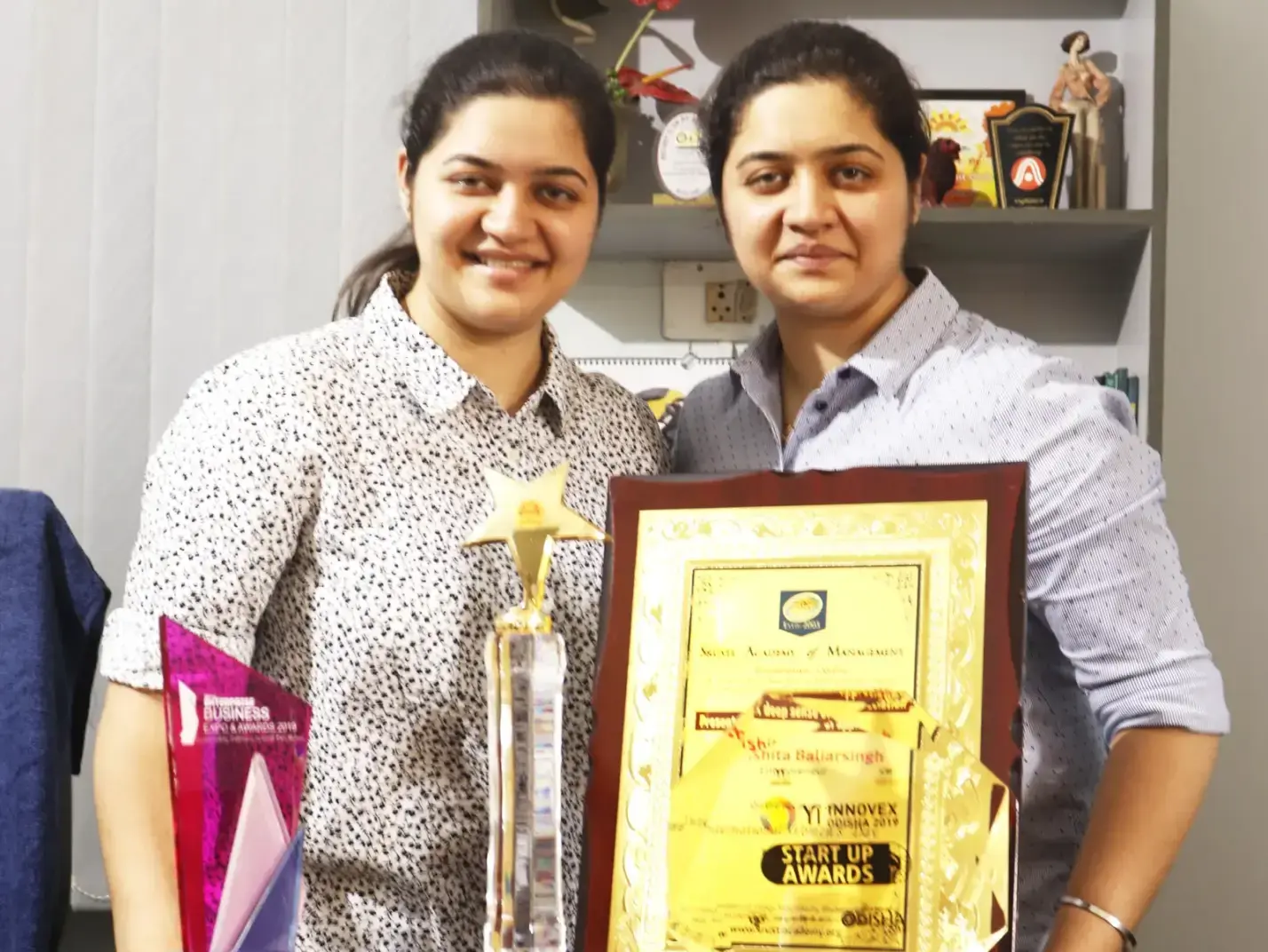
In 2019, they established Nexus Power with the aim of developing rechargeable batteries using bio-based materials derived from agricultural residue. During the COVID-19 lockdown in 2020, the company produced its first battery prototype after months of research and experimentation.
According to Nexus Power, its proprietary technology uses protein extracts obtained from agricultural residue to develop biodegradable battery components. While the company has not publicly disclosed the complete chemistry due to intellectual property protection, it says the technology aims to reduce reliance on conventional battery materials while encouraging the use of renewable, locally available resources.
Addressing Battery Sustainability And Agricultural Waste
India generates millions of tonnes of agricultural residue every year, much of which is burned after harvest, contributing to seasonal air pollution and greenhouse gas emissions. At the same time, demand for cleaner and more sustainable battery technologies continues to grow as electric vehicle adoption accelerates across the country.
Nexus Power’s research attempts to connect these two challenges by converting agricultural waste into battery materials. The company says its biodegradable batteries are designed to reduce environmental impact while supporting a circular economy by creating value from biomass that might otherwise be discarded. Publicly available information indicates that the technology remains in the prototype and testing stage, with the startup continuing research, pilot production and validation before large-scale commercial deployment.

The entrepreneurial journey has also involved overcoming challenges beyond technology. During the pandemic, the founders faced funding constraints and delays before securing support through the Government of India’s Technological Incubation and Development of Entrepreneurs (TIDE) programme.
As young women leading a manufacturing-focused technology startup, the sisters have also spoken publicly about facing gender bias and scepticism in investor meetings and within an industry where women remain significantly underrepresented.
The Logical Indian’s Perspective
Innovation often begins by recognising possibilities where others see limitations. Nishita and Nikita Baliarsingh’s work demonstrates how young entrepreneurs are exploring ways to address multiple environmental challenges through a single idea transforming agricultural residue into a potential clean-energy resource.
At the same time, emerging climate technologies must demonstrate safety, affordability, performance and scalability before they can achieve widespread adoption. Supporting research, encouraging women in science and entrepreneurship, and investing in sustainable innovation ecosystems can help accelerate solutions that benefit both people and the planet while strengthening India’s clean-energy future.
What role do you think young innovators can play in building sustainable technologies that solve everyday environmental challenges? Share your thoughts with us.
Also Read: Assam’s Wildlife Champion Bharat Bora Turns His Home Into A Lifeline For Injured Wildlife


