




Jadav ‘Molai’ Payeng, widely known as the “Forest Man of India”, has been conferred the newly instituted Assam Nakshatra Award in recognition of his extraordinary contribution to environmental conservation. The award was presented at a public ceremony in Tezpur, honouring his four-decade-long mission of transforming a barren sandbar on Majuli into the 1,360-acre Molai Forest.
Payeng began planting trees in 1979 after witnessing a devastating flood that left hundreds of reptiles dead on the treeless banks of the Brahmaputra River. Today, the forest is home to endangered Royal Bengal tiger, Indian rhinoceros, deer, birds and seasonal herds of more than 100 elephants. During the felicitation, organisers from the Axomiya Suraksha Manch praised his lifelong dedication to preserving Assam’s natural heritage, while Payeng urged governments to pursue development without sacrificing forests.
A Teenager’s Resolve Sparked an Ecological Revolution
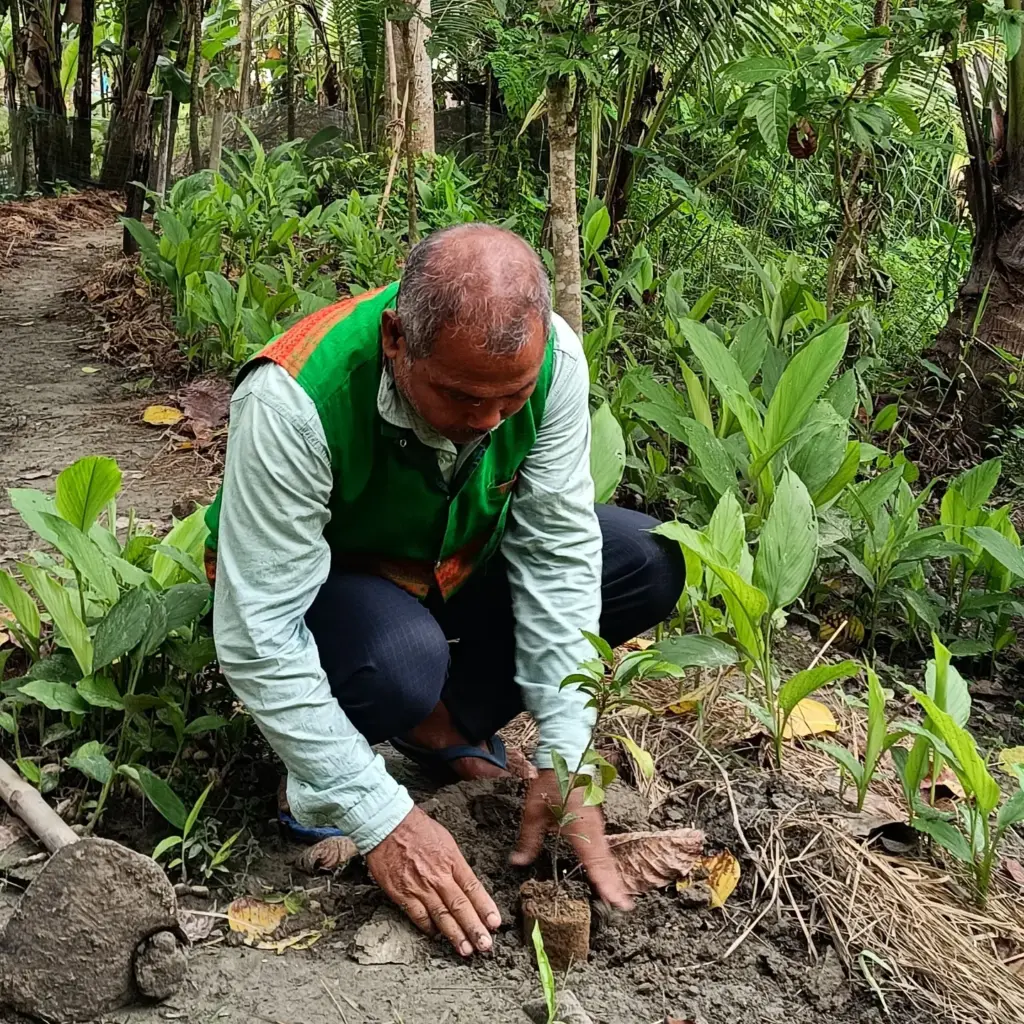
Payeng’s journey began in 1979 when, as a 16-year-old, he witnessed the aftermath of severe flooding that left hundreds of reptiles dead on an exposed sandbar due to the lack of tree cover. Disturbed by the destruction, he asked village elders how such tragedies could be prevented, only to be met with scepticism. Refusing to accept that nothing could be done, he started planting bamboo saplings before gradually introducing thousands of native species, including teak, arjun and other indigenous trees. Working largely alone, he used traditional methods such as drip irrigation with suspended earthen pots to keep the young plants alive in the harsh riverine landscape. What began as the effort of one determined teenager steadily evolved into one of India’s most inspiring environmental success stories.

A Forest That Became a Haven for Wildlife
For years, Payeng’s work remained largely unnoticed. It was only in 2008 that the forest department discovered the thriving woodland while tracking a herd of elephants that had taken refuge there. The discovery brought international attention to his remarkable achievement and demonstrated the ecological value of long-term community-led restoration. Today, Molai Forest stretches across approximately 1,360 acres and supports an extraordinary range of biodiversity, including endangered Royal Bengal tigers, Indian rhinoceroses, numerous bird species, reptiles and seasonal elephant herds. During the Assam Nakshatra Award ceremony, organisers highlighted Payeng’s concern over the rapid environmental degradation taking place across the state. Accepting the honour, he stressed that economic progress should never come at the cost of forests. He urged policymakers to ensure development without deforestation.
A Legacy Inspiring Climate Action Across Generations
Payeng’s work has received national and international recognition over the years. He was awarded the Padma Shri in 2015, and recent ecological studies have found that the biodiversity and carbon storage of the man-made Molai Forest closely resemble those of naturally occurring forests. These findings reinforce the growing understanding that carefully planned, community-led afforestation can play a significant role in combating climate change, reducing riverbank erosion and restoring damaged ecosystems. His conservation mission is now being carried forward by his daughter, Munmuni Payeng, who leads the “Molai Kathoni 2.0” initiative. The campaign aims to plant more than one million trees on neighbouring sandbanks to strengthen Majuli’s ecological resilience and protect the island from continued erosion.
From One Man’s Vision to a Global Conservation Model
Payeng’s journey has become a powerful example of how individual action can inspire collective environmental responsibility. His work has shown that restoring degraded landscapes is possible even without large institutional resources, provided there is patience, commitment and a deep understanding of local ecosystems. At a time when climate change and biodiversity loss dominate global conversations, Molai Forest stands as living proof that nature can recover when given consistent care. His story continues to inspire conservationists, researchers and communities across the world who are seeking practical, nature-based solutions to environmental challenges.
The Logical Indian’s Perspective
Jadav Payeng’s story reminds us that environmental stewardship is not solely the responsibility of governments or global institutions. It can begin with the determination of a single individual. His four decades of quiet perseverance demonstrate that meaningful climate action is built through consistent effort, empathy for nature and a long-term vision for future generations. As India continues to pursue economic growth and infrastructure development, his message about balancing progress with ecological preservation deserves serious attention.
Sustainable development cannot simply be measured through roads, industries or economic indicators. It must also account for thriving forests, healthy rivers and protected biodiversity. Honouring changemakers like Payeng not only celebrates their achievements but also encourages society to recognise that every community has the power to restore and protect its environment.
As environmental challenges continue to grow, what small but meaningful steps can each of us take to ensure that development and nature coexist rather than compete?


