


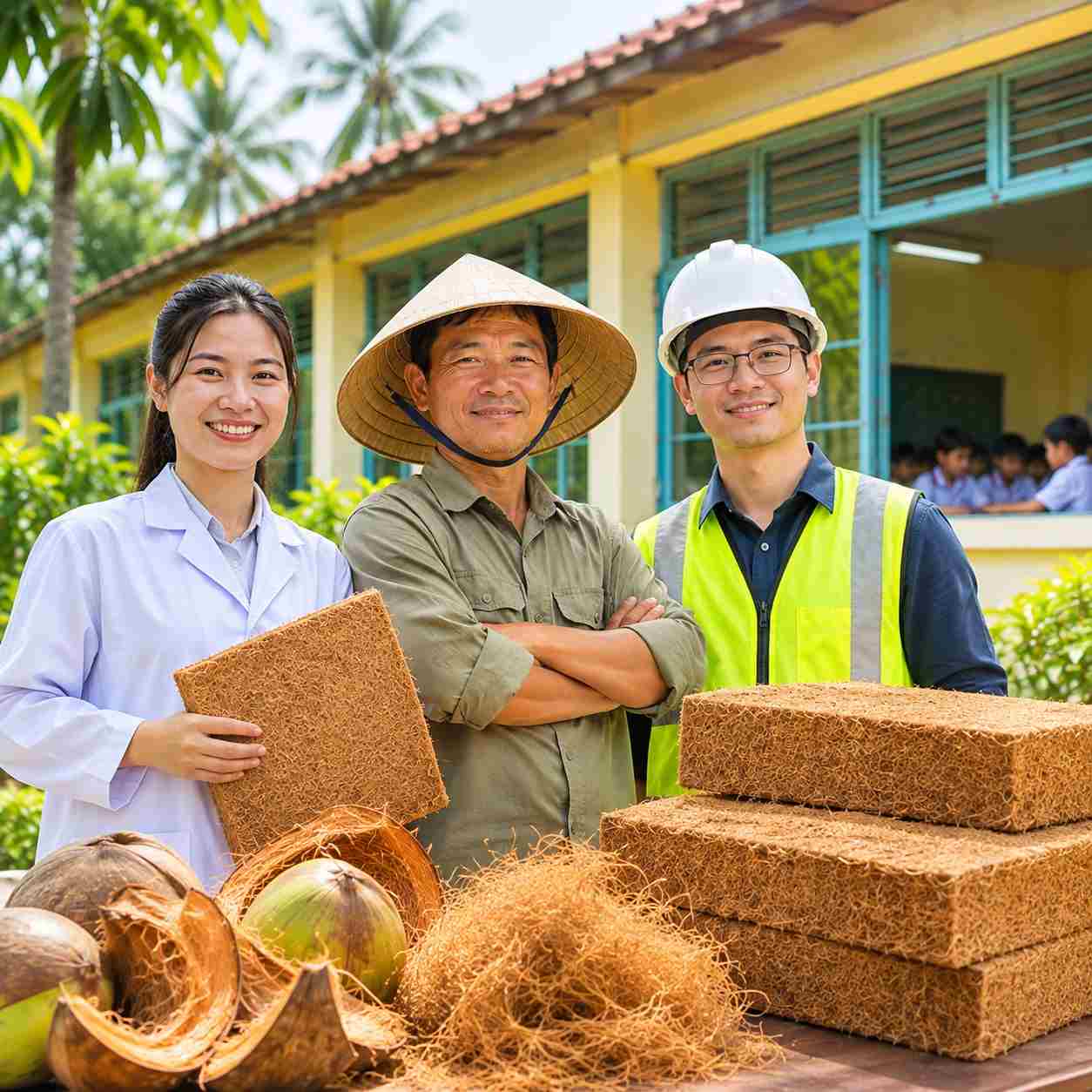

Innovators deploying coconut coir insulation across Vietnam sustainable schools showcase agricultural waste upcycling, creating natural thermal insulation from bio based building materials to achieve classroom natural cooling, advance circular economy construction, manufacture coconut husk panels, produce eco friendly roofing, ensure lower indoor temperature, deliver school heat reduction, champion green building innovation, utilize renewable construction resources, optimize sustainable classroom design, and solve heat challenges through a tropical architecture solution.
In tropical regions, extreme heat inside school classrooms presents a severe barrier to effective education. Corrugated metal roofing sheets, commonly used in under-resourced rural schools, absorb intense solar radiation, turning indoor learning spaces into sweltering environments that induce student fatigue, reduce concentration, and disrupt daily academic performance.
Transforming Agricultural Waste Into Insulation
In Vietnam, one of the world’s leading producers of coconuts, millions of tons of coconut husks are generated annually as agricultural by-products. Traditionally, these husks were discarded, burned openly, or dumped into waterways, creating environmental disposal hazards.
Recognizing the unique material properties of coconut coir, Vietnamese researchers and eco-architects began harvesting these discarded husks to engineer natural building insulation. Coconut fibers possess high lignin content, excellent moisture resistance, and low thermal conductivity, making them naturally suited for thermal barrier applications. By processing raw coir into compressed insulation boards and composite roofing panels, engineers created an affordable, high-performance building material that prevents solar heat from penetrating school ceilings.

Creating Comfortable Learning Environments
Installing coconut-fiber insulation panels beneath classroom roofs significantly slows down heat transfer from the harsh external climate into indoor spaces. Studies evaluating natural fiber insulation show that coir-based materials can reduce interior temperatures by several degrees Celsius compared to uninsulated metal or concrete structures.
This natural cooling effect dramatically improves thermal comfort for young students and teachers without relying on expensive, energy-hungry air conditioning systems. Classrooms remain cooler throughout peak afternoon hours, creating comfortable learning environments where children can maintain focus and well-being. Furthermore, the fibrous structure of coconut coir provides acoustic dampening, reducing external noise disruptions during heavy rainstorms.
Advancing The Circular Construction Economy
Repurposing coconut husks into building components demonstrates the power of circular economic design in developing nations. Instead of relying on imported synthetic insulation materials like expanded polystyrene or fiberglass, local communities utilize abundant, renewable agricultural resources.
This localized supply chain generates additional income streams for coconut farmers and rural processing facilities while reducing regional waste management burdens. Because coconut coir is completely organic, biodegradable, and non-toxic, these natural panels do not off-gas harmful chemicals into classrooms, protecting indoor air quality for young children.
Scalable Solutions For Tropical Regions
The success of coconut-fiber thermal insulation highlights a broader paradigm in sustainable architecture: innovative climate solutions do not always require high-cost, complex technology. By studying native agricultural resources, tropical countries can develop low-cost, eco-friendly building standards tailored to their specific climate challenges.
As rising global temperatures intensify heat stress across South and Southeast Asia, adopting bio-based insulation offers a practical path toward climate-resilient infrastructure. Scaling up the production of coconut coir building panels can help thousands of public schools transition toward energy-efficient, zero-carbon operations.

The Logical Indian’s Perspective
Vietnam’s use of coconut waste to insulate school classrooms demonstrates how green innovation can solve environmental and social challenges simultaneously. By converting an agricultural by-product into natural thermal cooling, this initiative protects student well-being while advancing circular economy principles. Supporting natural material research remains essential for building sustainable public infrastructure across developing nations.
How can Indian agricultural states leverage crop waste like coconut coir and stubble to manufacture low-cost insulation panels for rural government schools nationwide?
Also Read: Basanti Devi: The Woman Who Brought Communities Together To Revive The Kosi River


