




Padmini, an 82-year-old veteran educator who began her teaching career at age 19 in Calcutta, continues to walk into a classroom every single day. Decades of experience, spanning Calcutta, Nigeria, and 14 years as a department head at Delhi’s British School, shaped her core conviction that high-quality education is the single most powerful tool to elevate underprivileged communities. In 1999, she established My School Satya Surabhi in Attuvampatti, near Kodaikanal, providing completely free education to underserved local children.
A Promise Carried into Tribal Hamlets
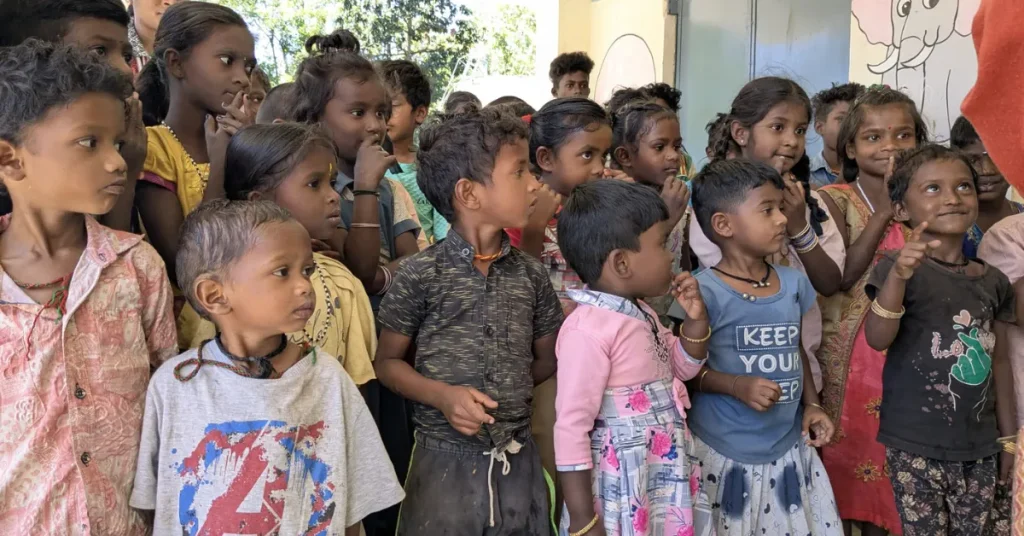
In 2024, a visit to the remote Kombai tribal settlements near Kodaikanal revealed a stark reality: most children across the 50 to 60 tribal families were completely out of school. Historically reliant on subsistence farming, cotton picking, and honey collection, families routinely involved their young children in agricultural labor to earn ₹100 to ₹200 daily. When distance and a ₹3,000 monthly transportation cost prevented families from sending their children to the main campus, Padmini decided to bring the school directly to the settlement through a Saturday initiative called ‘School on Wheels’.
Focusing initially on the 30-family hamlet of Kombai-Perungadu, teachers faced immediate hurdles. Hesitant parents questioned the value of schooling, while children frequently arrived unwashed and in worn clothes. Realizing that academic lessons could not take root without personal care, teachers spent the first two months visiting homes to build trust with community members.
Nail Cutters Before Textbooks
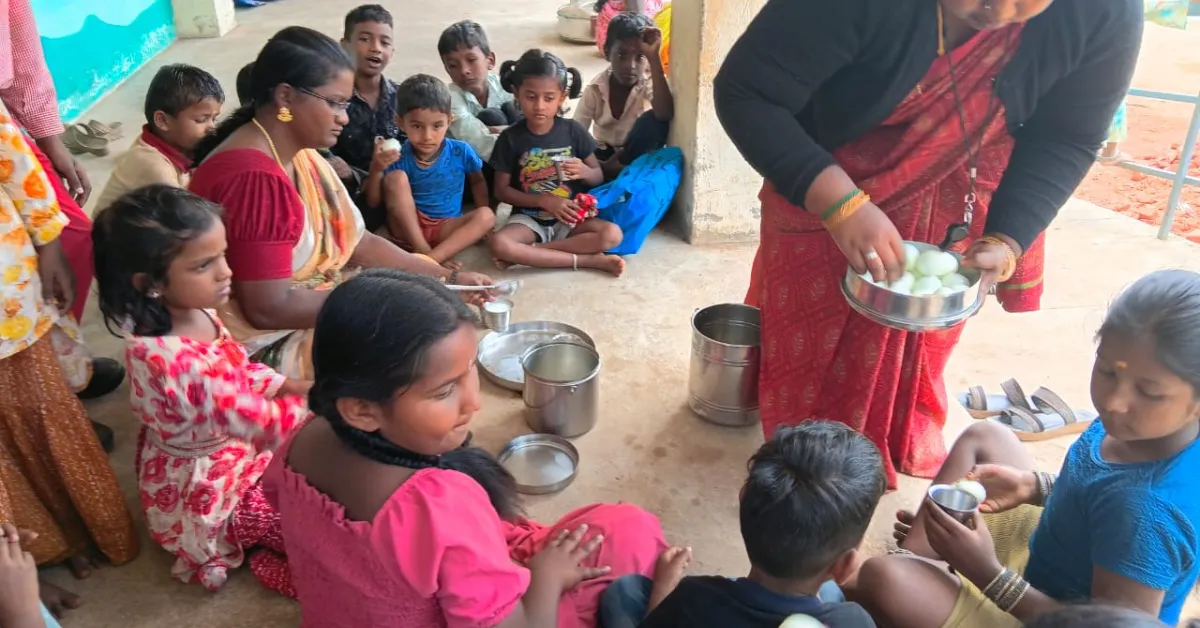
Instead of introducing standard alphabets or arithmetic, the outreach team started with basic self-care and human dignity. Teachers literally carried nail cutters to trim the children’s fingernails, taught handwashing, emphasized personal hygiene, and served nutritious meals featuring cereal, milk, and boiled eggs.
Once personal grooming established a sense of self-worth, classroom instruction followed Padmini’s signature philosophy: Integrated Learning. Drawing from her background in thematic instruction, Padmini believes no subject should be taught in isolation. A lesson on a wild agricultural seed incorporates biology (seed structure), social science (regional history and native geography), mathematics (measuring seed dimensions with rulers to calculate agricultural density), and climate science (local rainfall patterns). This holistic method transforms learning from abstract memorization into an immersive, practical experience.
A Community Transformed Across Generations
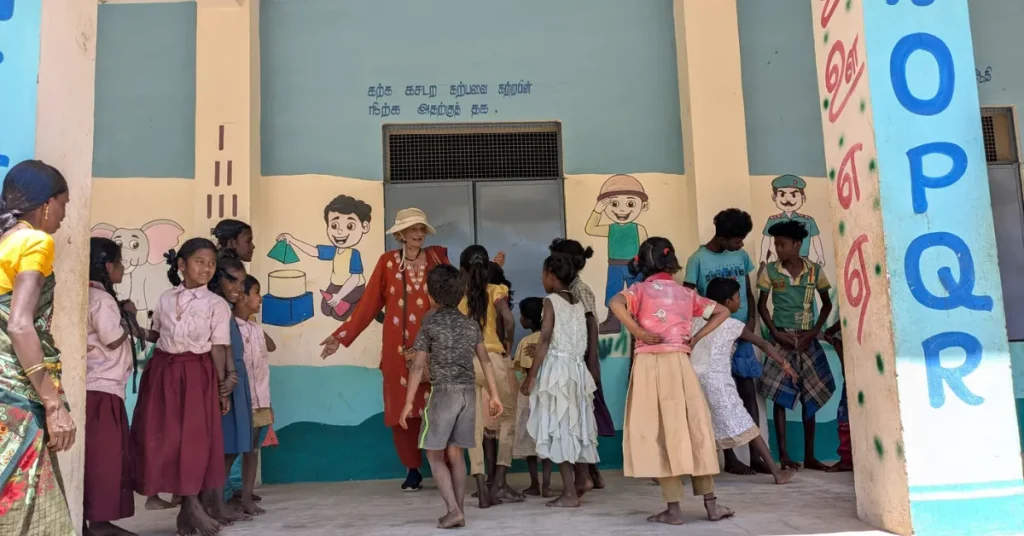
Two years after its 2024 inception, the ‘School on Wheels’ has brought over 50 first-generation tribal learners into education. More than 20 children have transitioned into full-time weekday students at Satya Surabhi’s main campus, traveling 10 to 15 kilometers daily to study free of cost.
The non-judgmental environment has also inspired adult villagers who never attended school. Mothers like Mahalakshmi now sit alongside their children during Saturday classes to learn Tamil alphabets and multiplication tables. Elderly community members, including a man in his 80s named Pandy, have learned to write their names for the very first time on a classroom blackboard.

Preserving Tribal Heritage
Education in the Kombai settlements goes beyond standard academics by actively honoring indigenous tribal wisdom and environmental heritage. Teachers integrate local folk songs, regional storytelling, and native forest conservation into the daily curriculum, ensuring children remain deeply connected to their ancestral roots. By celebrating tribal identity alongside modern literacy, the initiative instills immense pride, proving that formal schooling can empower indigenous communities without erasing their rich cultural legacy.

The Logical Indian’s Perspective
Padmini’s work through Satya Surabhi highlights that bridging educational divides in marginalized tribal belts requires meeting communities where they are. By grounding education in personal care, nutritional support, and integrated learning, she has demonstrated that academic interest flourishes naturally when human dignity comes first. Teaching first-generation learners and their parents that every honest trade deserves respect paves the way for lasting, community-wide self-reliance.
How can regional education departments partner with grassroots educators to replicate mobile, hygiene-centered learning models in remote tribal habitations across India?
Also Read: How Former UPSC Aspirant Shruti Shrivastava Restarted at 30 to Transform Rural Education


