




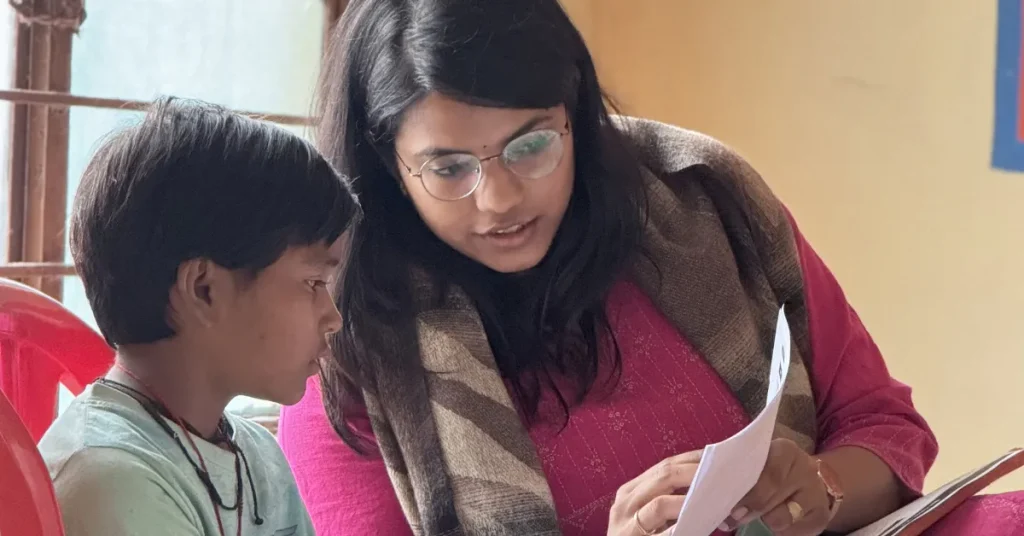
Shruti Shrivastava, a 32-year-old philosophy graduate from Lady Shri Ram College, spent nearly a decade preparing for the Civil Services Examination. Growing up across various towns in Madhya Pradesh due to her parents’ government jobs, she observed deep educational inequalities early on. For Shruti, clearing the UPSC was never the ultimate goal, it was simply a vehicle to serve society. However, on April 16, 2024, after six attempts, four prelims cleared, and one interview appearance, her years-long dream came to an end.
Restarting from Scratch
Facing the daunting prospect of beginning anew at age 30, Shruti refused to abandon her passion for social change. In July 2024, her close friend and college batchmate Mrinalika Rathore who had founded the Sashaktikaran Foundation in 2017 before joining the Indian Administrative Service (IAS), offered her the opportunity to take over the organization. Supported financially by her parents and joined by her sister Smriti as co-director, Shruti stepped in to lead a new chapter.
Recognizing the need for specialized technical expertise in rural pedagogy, Shruti partnered with education professional Adarsh Mohandas. Together as co-founders, they conceptualized Project Neev to strengthen existing government primary schools from within, rather than building parallel systems that often fail to reach scale.
Bridging the Rural Learning Gap
Ground visits across Madhya Pradesh revealed a pervasive structural challenge: in many rural schools, one or two teachers were forced to juggle five grade levels simultaneously. Under such severe constraints, teachers lacked the time and resources to address individual learning levels, leaving struggling students behind.
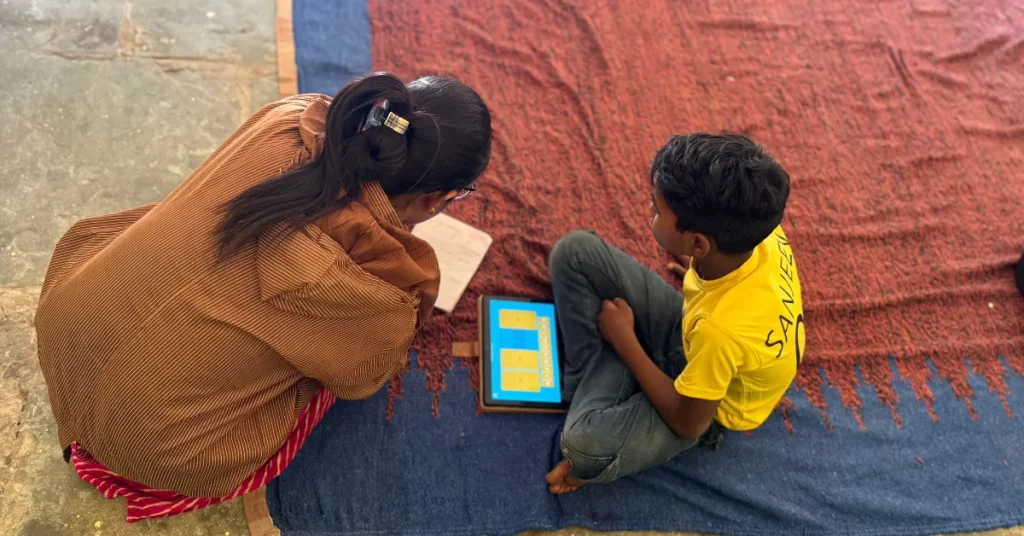
Officially launched in October 2024, Project Neev introduced a hybrid, level-based learning model. Groups of five children step out of regular multi-grade classrooms for focused 30-minute sessions using tablets running Chimple, a gamified learning application developed by the Sutara Foundation. The app adjusts automatically to each child’s specific learning pace, whether they are identifying basic alphabets or solving subtraction problems, allowing personalized progress without disrupting school schedules.

Local Women as Changemakers
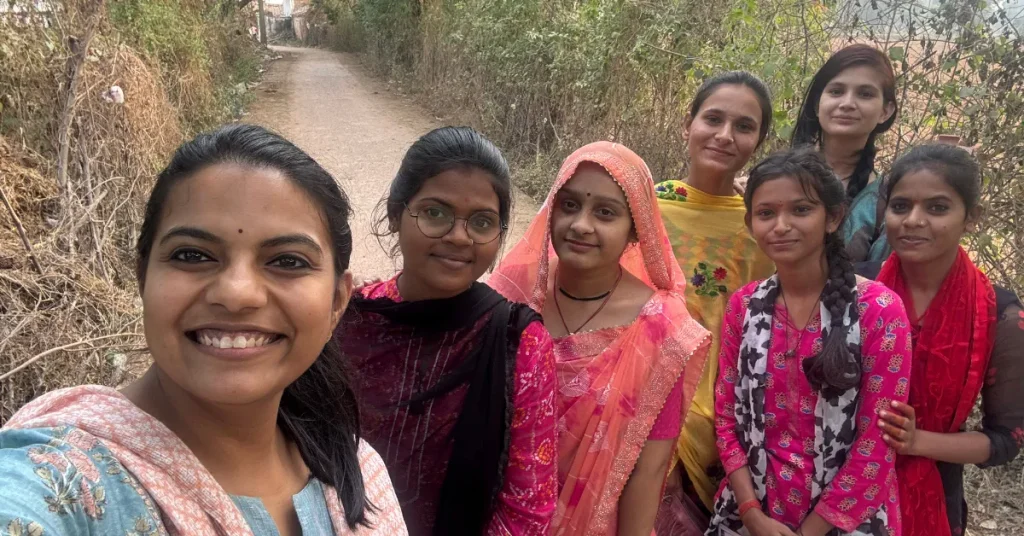
The cornerstone of Project Neev’s success is its network of Shiksha Saathis, women recruited directly from the participating villages. Shruti intentionally removed college graduation as a mandatory requirement, choosing instead to train local women who demonstrated aptitude, passion, and strong communication skills.
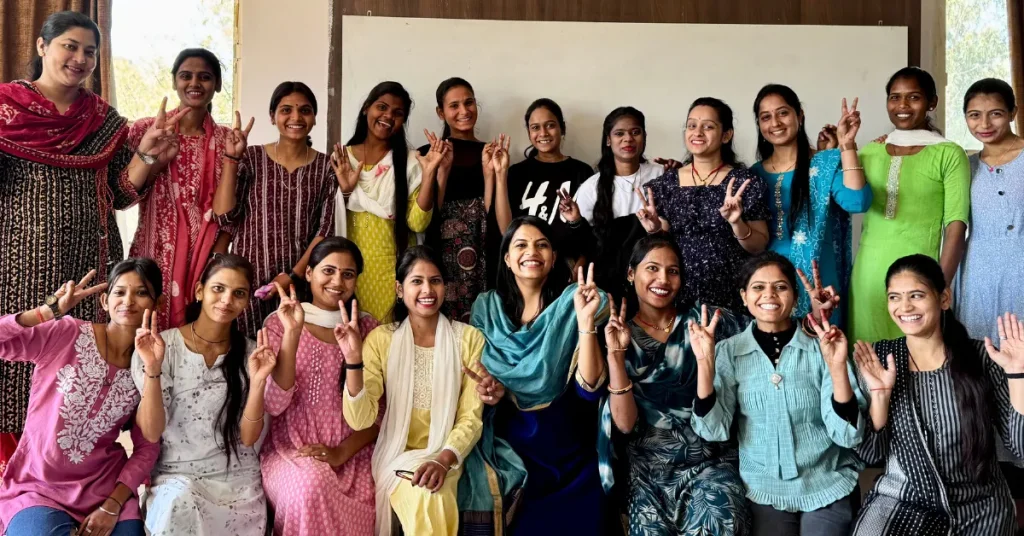
These facilitators manage tablet sessions, observe qualitative learning behaviors, and build students’ confidence. For facilitators like 22-year-old Chhaya Raja of Jatauwa village and Savita Ahirwar of Bankhedi, the role provided financial independence, enabling them to support aging parents, resume their own higher education, and earn community respect. To date, Project Neev employs 30 rural women across six districts.
Real Impact and Structural Longevity
The impact of Project Neev is evident in both numbers and renewed student confidence. Reaching approximately 900 children across 10 government primary schools and nine residential hostels, the foundation reports that 291 students improved by at least one learning level in Hindi, 327 in English, and 355 in mathematics. Regular attendees demonstrated overall learning growth ranging between 70% and 200%.
Backed by nearly 200 individual donors and working in partnership with Madhya Pradesh’s Departments of Education and Tribal Affairs, Shruti’s vision remains focused on deep, long-term transformation.
The Logical Indian’s Perspective
Shruti Shrivastava’s journey proves that public service is defined by purpose rather than designation. By transforming personal disappointment into grassroots innovation, she has demonstrated how combining technology with local women’s leadership can fix structural gaps in public education. When rural children learn at their own pace and village women step up as educational leaders, entire communities build a foundation for self-sustaining growth.
How can state education departments integrate personalized digital learning modules alongside community facilitators into standard primary school curricula across rural India?
Also Read: How Smita Choudhary’s Foundation Empowers 3,500 Children Across 46+ Villages in Himachal Pradesh


