




Women from Odisha’s cyclone-prone coastal villages are leading an ambitious effort to restore one million mangroves, transforming themselves from survivors of repeated climate disasters into frontline environmental stewards. Supported by community organisations and conservation partners, the initiative seeks to strengthen natural coastal defences, restore biodiversity and create sustainable livelihoods while reducing the impact of increasingly severe cyclones. By reviving ecosystems that once shielded their homes, these women are demonstrating how community-led, nature-based solutions can play a vital role in building climate resilience.
Turning Survivors into Climate Leaders
For decades, Odisha’s coastline has borne the brunt of devastating cyclones, storm surges and coastal erosion. Families have repeatedly rebuilt their homes and livelihoods after disasters, with women often carrying the greatest burden of recovery. Today, many of these same women are leading an inspiring transformation by restoring mangrove forests that serve as the coast’s natural defence against extreme weather.
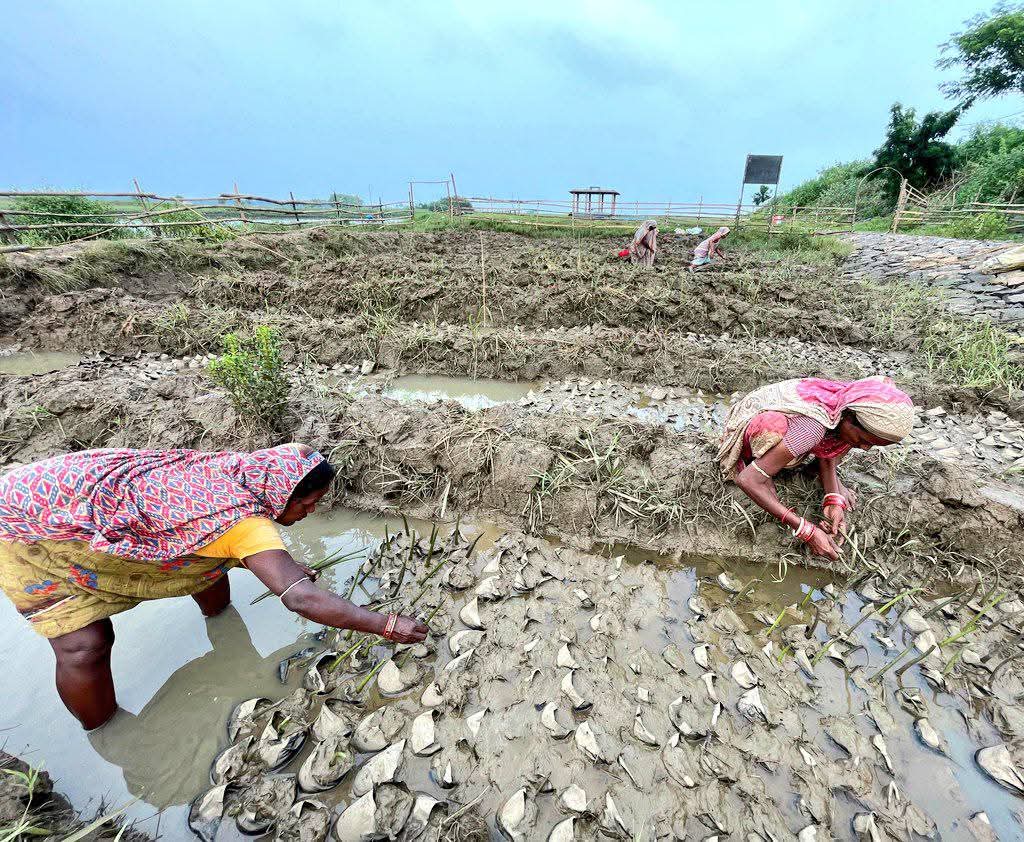
Among them are women from villages such as Sana Jhadling, Nuagarah and Biluamundali, who regularly travel through muddy tidal estuaries to plant and protect mangrove saplings. What was once seen merely as a source of firewood is now recognised as a living shield capable of protecting communities from future storms. Their work reflects a powerful shift from surviving climate disasters to actively preparing for them.
Building a Million-Mangrove Shield
Working across tidal mudflats and estuaries, the women raise native mangrove saplings in community nurseries before transplanting them into degraded coastal landscapes. Their collective goal is to plant and nurture one million mangroves by 2030, creating living barriers that reduce wave energy, prevent coastal erosion and absorb storm surges before they reach vulnerable settlements.
The initiative also supports biodiversity by creating breeding grounds for fish, crabs, birds and other coastal wildlife while storing significant amounts of carbon. Since its launch, around 45,000 mangroves have already been planted, marking an important milestone towards the programme’s long-term conservation vision.
Science and Indigenous Knowledge Grow Side by Side
Launched in 2023, the Women for Mangroves Initiative combines scientific expertise with generations of local ecological knowledge. Guided by conservationist Soumya Ranjan Biswal and the Odisha Paryavaran Sanrakshan Abhiyan (OPSA), participating women have learned to identify native mangrove species such as Avicennia and Rhizophora, understand salinity gradients and sediment conditions, and carefully time plantation activities with tidal cycles to maximise survival.
These techniques have resulted in an estimated 85 to 90 per cent survival rate, significantly improving restoration outcomes. As the forests regenerate, local communities have begun witnessing the return of fish, crabs and wetland birds, offering renewed hope for fishing-dependent families whose livelihoods have declined over the years.
This morning and afternoon Planted 3,000 mangroves with the vulnerable mangrove-user community at Devi River Mouth, reaching 15,000 so far with a goal of 20,000 this season. 🌱#Mangroves are vital for coastal protection and livelihoods.🌊🚣🏻♂️
— Soumya Ranjan Biswal 🇺🇳🇮🇳 (@SoumyaMarineWL) September 3, 2024
Join ans support us.🙏🏻#OdishaCoast pic.twitter.com/c6x1Sw6Qbo
More Than Restoration: Creating Sustainable Livelihoods
The programme extends well beyond environmental conservation. Women participating in the initiative receive training in nursery management, plantation techniques and ecosystem monitoring, enabling them to develop new livelihood opportunities linked to conservation. Their leadership has also strengthened community ownership of restoration efforts, ensuring young mangroves are protected and maintained long after they are planted.
Participants receive modest monthly honorariums ranging from ₹1,000 to ₹6,000, depending on the programme and available funding. While the income may be modest, it provides valuable financial support for households and recognises women’s growing role in climate adaptation and ecosystem restoration.

Protecting Nature Without Protecting Its Protectors
Despite becoming the backbone of coastal conservation, many of these women continue to work without legal ownership or recognised community rights over the land they protect. With many men migrating to cities for work, women increasingly shoulder responsibility for restoring mangroves, managing nurseries and safeguarding fragile ecosystems.
However, mangrove landscapes often fall under overlapping forest, fisheries and wetland regulations, creating uncertainty over governance and limiting access to conservation incentives and disaster-related support. Environmental experts have argued that these areas should receive stronger recognition under the Forest Rights Act, 2006, enabling communities actively managing the ecosystems to secure legal rights and long-term stewardship.
Nature-Based Solutions for a Changing Climate
Scientific evidence consistently shows that healthy mangrove forests reduce the destructive impact of cyclones, tidal surges and coastal flooding. As climate change intensifies extreme weather events, restoring coastal ecosystems has become an increasingly important complement to traditional infrastructure such as embankments and seawalls. Odisha’s experience illustrates how combining ecological restoration with community participation can strengthen long-term climate resilience while protecting both people and nature.
The Logical Indian’s Perspective
Climate resilience cannot be built through concrete alone. It must also grow from healthy ecosystems and empowered communities. Odisha’s women demonstrate that those most affected by climate change can become its strongest champions when equipped with knowledge, resources and opportunities to lead. Their million-mangrove initiative is about more than planting trees. It is about restoring hope, protecting livelihoods and preparing future generations for a changing climate. At the same time, recognising and securing the rights of those who safeguard these ecosystems is essential to ensure conservation remains both effective and equitable. As India faces increasingly frequent climate disasters, how can governments and communities work together to recognise, support and empower local women as leaders in climate action?


