




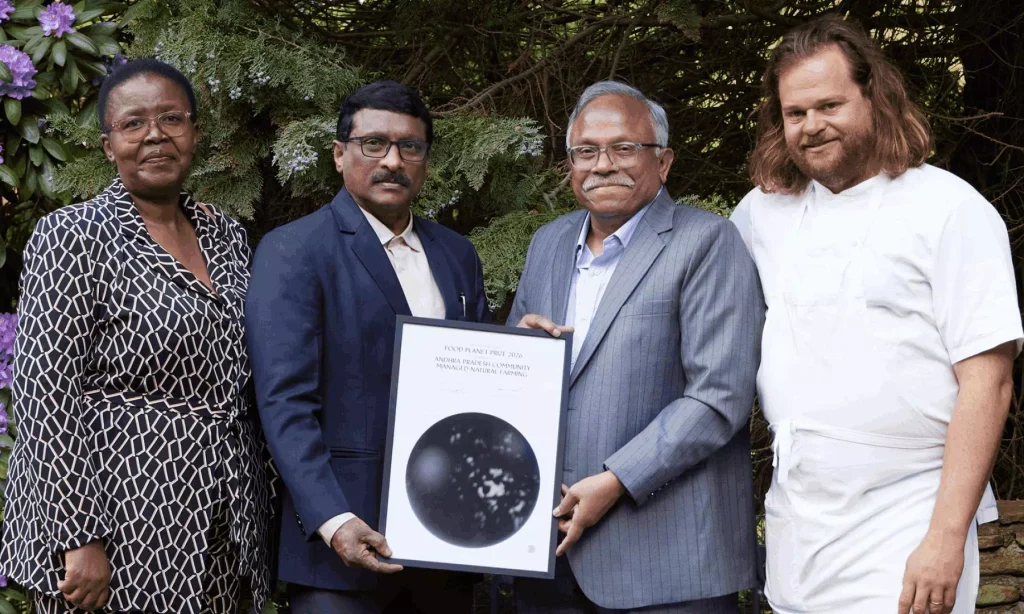
Andhra Pradesh Community Managed Natural Farming (APCNF), a state-wide climate initiative implemented through Rythu Sadhikara Samstha (RySS), transformed over one million smallholder farmers (driven predominantly by women self-help groups) to chemical-free agriculture, earning the prestigious 1 million euro Gulbenkian Prize for Humanity.
The Agrarian and Ecological Crisis in Rural Andhra Pradesh
For decades, the Green Revolution’s reliance on chemical fertilizers, synthetic pesticides, and monoculture farming extracted a heavy toll on rural Andhra Pradesh. Soaring input costs forced smallholder farmers into recurring debt cycles, while intensive chemical usage stripped the soil of essential organic matter and beneficial micro-organisms. Coupled with rising temperatures, depleting groundwater levels, and erratic monsoon patterns driven by climate change, farming in the region became increasingly unviable, driving rural distress across thousands of villages.
Recognizing that conventional chemical agriculture posed an existential threat to food security and rural livelihoods, the Government of Andhra Pradesh established Rythu Sadhikara Samstha (RySS) in 2016. The objective was ambitious: transition the state’s entire farming population to 100% natural, chemical-free agriculture.

Women-Led Grassroots Mobilization
Instead of relying on top-down bureaucratic mandates, APCNF structured its implementation around community ownership. The driving engine of this agrarian transformation was Andhra Pradesh’s vast network of women Self-Help Groups (SHGs). Recognizing that women bear the brunt of household health issues caused by chemical toxicity and financial stress, SHGs led local outreach efforts.
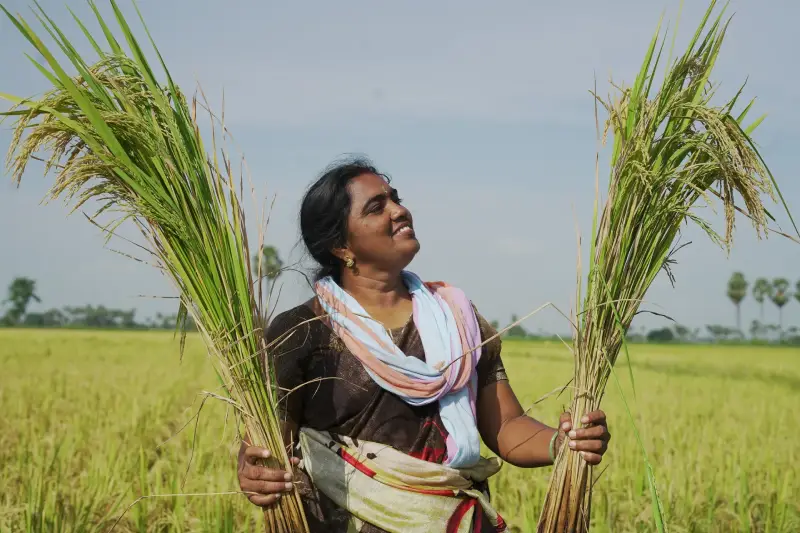
Experienced local farmers were trained as Champion Farmer Coaches. These coaches conducted field demonstrations, proving to skeptical neighbors that natural inputs could match or exceed conventional crop yields while significantly cutting production costs. Through peer-to-peer learning, over 1 million smallholder and tenant farmers across 500,000 hectares adopted community-managed natural farming practices.
The Science of Regenerative Natural Farming
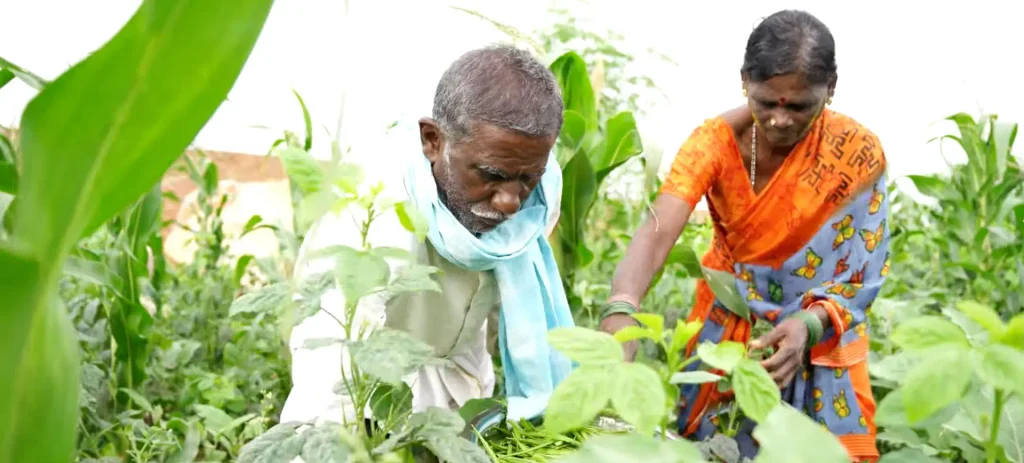
APCNF eliminates all synthetic chemical fertilizers and pesticides. Instead, farmers utilize low-cost bio-formulations made from indigenous cow dung, urine, jaggery, and pulse flour, such as Jeevamrutham (soil inoculant) and Beejamrutham (seed treatment). These microbial preparations activate soil biology, encouraging earthworms and beneficial bacteria to fix atmospheric nitrogen and solubilize phosphorus naturally.
Furthermore, APCNF introduced Pre-Monsoon Dry Sowing (PMDS), an innovative technique where farmers sow diverse multi-crop seed mixes before the arrival of monsoons. Covered with natural mulch, these plants sprout using minimal atmospheric humidity, ensuring year-round green cover, preventing soil erosion, and recharging depleted water tables. Fields that were once dry and cracked during summer months turned into resilient, biodiverse ecosystems.
Global Recognition: Winning the Gulbenkian Prize for Humanity
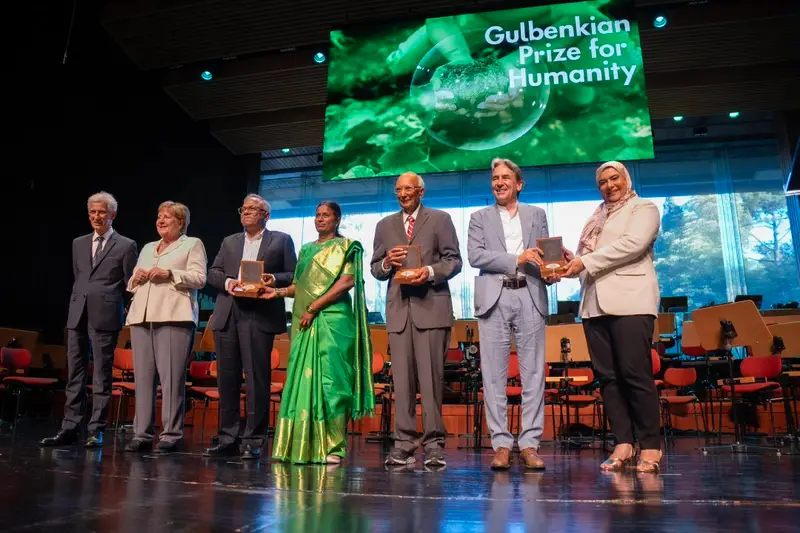
In July 2024, the world took notice. The Calouste Gulbenkian Foundation awarded the 2024 Gulbenkian Prize for Humanity (one of the world’s premier awards for climate action) jointly to APCNF, world-renowned soil scientist Dr. Rattan Lal, and Egyptian organization SEKEM.
Selected by an international jury chaired by former German Chancellor Angela Merkel, APCNF was honored in Lisbon, Portugal, for its massive impact on global food security, ecosystem restoration, and climate adaptation. Executive Vice Chairman of RySS Vijay Kumar Thallam and Nagendramma Nettem, a Champion Farmer Coach, accepted the award on behalf of Andhra Pradesh’s farming community.
The Logical Indian’s Perspective
The triumph of Andhra Pradesh’s natural farming movement proves that planetary healing and rural prosperity go hand in hand. By placing women self-help groups and traditional soil science at the core of agricultural policy, APCNF demonstrated that smallholder farmers can lead global climate action. As industrial farming continues to degrade global soils and pollute water bodies, Andhra Pradesh’s community-managed model offers a scalable blueprint for nations seeking climate resilience, economic dignity for farmers, and toxin-free food systems.
How can Indian central and state governments scale the APCNF community-managed model to accelerate natural farming transitions across all agricultural states?
Also Read: From Invisible Workers To Climate Champions: 42,000 Waste Pickers Recognised Under UN Project


