




Anand Malligavad, a mechanical engineer turned water conservationist known as the “Lake Man of India,” is leading a grassroots water revolution by restoring dying lakes across Bengaluru and India using low-cost, ancient eco-engineering techniques.
The Impending Crisis of Bengaluru’s Forgotten Lakes
Once celebrated as the “City of Lakes,” Bengaluru historically relied on an intricate, cascading network of over 1,800 man-made waterbodies constructed centuries ago. However, rapid urbanization, unbridled real estate expansion, dumping of industrial effluent, and raw sewage influx drastically reduced that number to around 450. Most remaining lakes transformed into toxic, silted cesspools incapable of recharging the city’s depleted groundwater tables.
In 2015, while working as a successful corporate engineer and CSR head at Sansera Engineering, Anand Malligavad stumbled upon an alarming report predicting that Bengaluru could become a “zero-water city” by 2025. Hailing from Karamudia village in drought-prone North Karnataka, Malligavad understood the deep pain of water scarcity firsthand. Recognizing that conventional government lake restoration projects were often slow, capital-intensive, and heavily reliant on concrete, he decided to pioneer a completely natural alternative.
The Blueprint: Kyalasanahalli Lake Revival
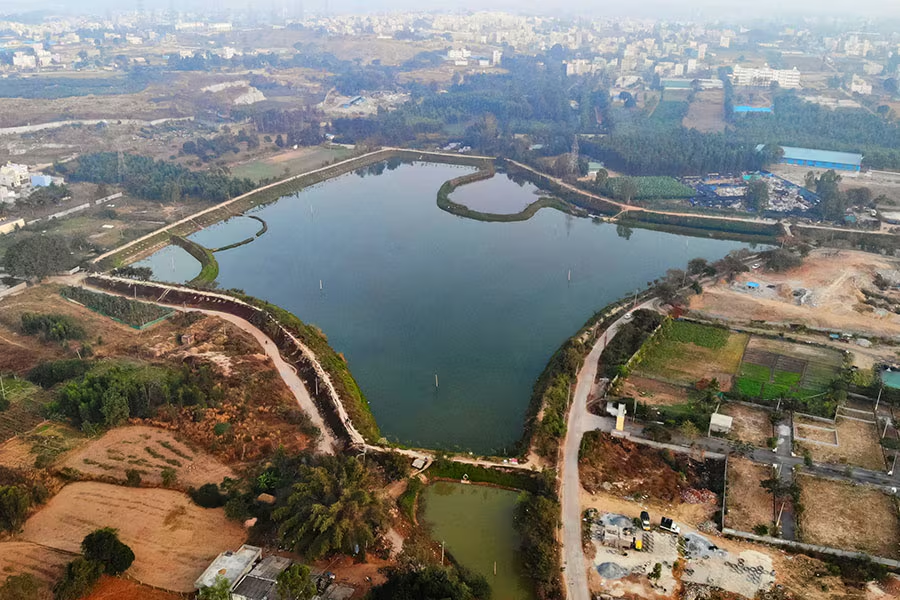
In 2017, Malligavad undertook his first project: the 36-acre Kyalasanahalli Lake near Anekal, which had remained dry and neglected for over 35 years. Supported by a budget of ₹95 lakh from his employer’s CSR funds, he bypassed traditional civil engineering defaults like concrete retaining walls and artificial drains. Instead, he engaged local community members, hired earthmovers, and excavated 400,000 cubic meters of silt.
The excavated soil was repurposed to construct earthen bunds along the lake border. Volunteers planted over 18,000 native saplings, including fruit-bearing and medicinal trees, and created five isolated earthen islands in the center of the lake to serve as safe nesting sanctuaries for birds. In just 45 days, the dry basin was completely restructured. When the monsoon rains arrived shortly after, Kyalasanahalli Lake brimmed with clean rainwater, transforming a barren landscape into a vibrant ecosystem.
Ancient Wisdom Meets Modern Eco-Engineering
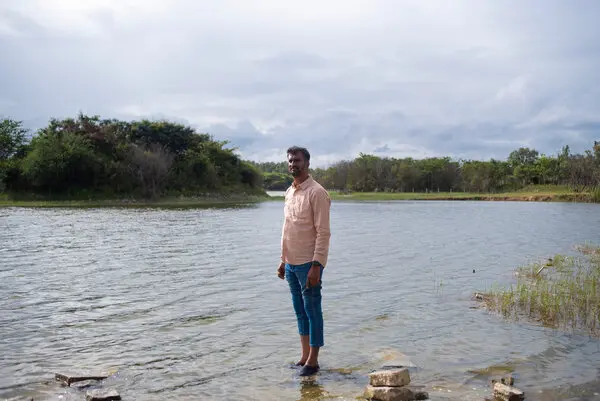
To refine his approach, Malligavad studied medieval South Indian hydrology, particularly the rainwater harvesting techniques of the 9th–13th century Chola Dynasty. The Cholas utilized a “ridge-to-river” concept, connecting cascading lakes through natural channels so overflow from one waterbody naturally fed into the next.
Adapting these principles, Malligavad developed a zero-concrete, low-maintenance restoration model which had, Basin Zoning which means dividing the lake bed into distinct zones so clean rainwater isolates from incoming graywater. Constructed Floating Wetlands utilizing water-purifying aquatic plants (like vetiver, duckweed, and cattails) to biologically treat incoming wastewater without chemicals and Biodiversity Integration by reintroducing native fish species that feed on mosquito larvae and algae, naturally maintaining water clarity.
This nature-based methodology costs significantly less than standard government contracts, finishes in under 100 days, and produces self-sustaining aquatic ecosystems that require minimal long-term mechanical maintenance.
Scaling Nationwide Through the Malligavad Foundation
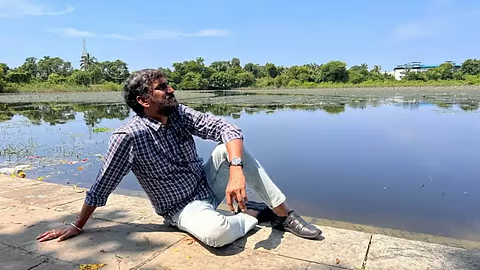
Driven by the success of his early restorations, Malligavad resigned from his corporate position in 2019 to establish the Malligavad Foundation. Partnering with corporate CSR initiatives, including JSW Foundation, Salesforce, and Biocon his organization has rejuvenated dozens of waterbodies in Karnataka (such as Mylasandra Lake and Margondanahalli Lake) and expanded efforts across India. To date, he has contributed to reviving over 35 lakes around Bengaluru and scores of waterbodies across multiple states.
His work has garnered international recognition, featuring in global documentaries such as Bloomberg’s An Optimist’s Guide to the Planet hosted by Nikolaj Coster-Waldau. While eco-restoration in complex urban landscapes occasionally faces administrative or local friction, Malligavad’s core philosophy remains anchored in empowering local residents as long-term custodians of their neighborhood lakes.
The Logical Indian’s Perspective
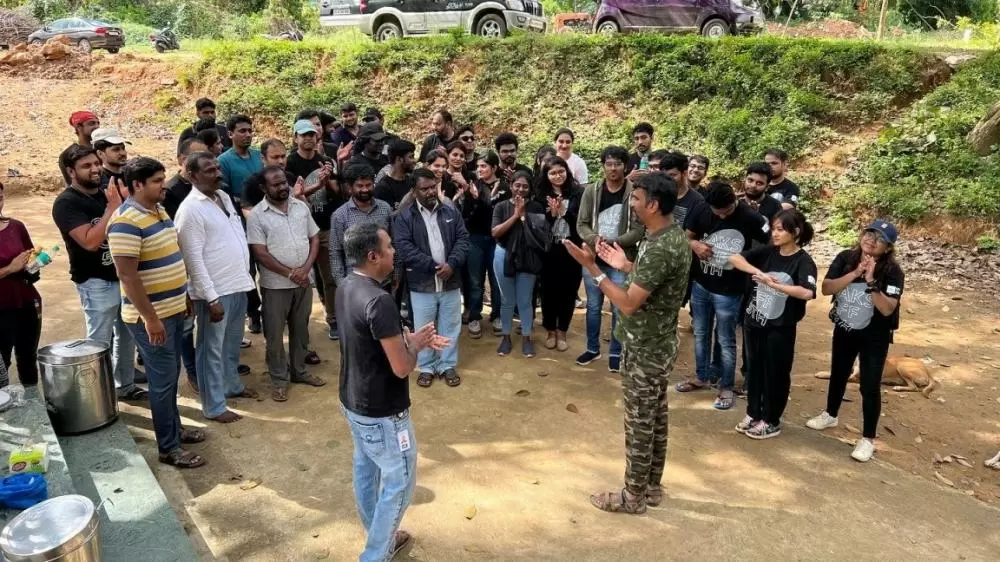
India’s mounting water crisis cannot be solved solely through concrete infrastructure and centralized municipal projects. The story of Anand Malligavad demonstrates that decentralizing water management and embracing low-tech, nature-based engineering can restore damaged ecosystems at a fraction of the traditional cost. When local communities actively participate in rejuvenating their natural water reservoirs, environmental conservation evolves from a distant civic duty into a shared collective responsibility. Protecting urban waterbodies requires blending traditional ecological wisdom with active community stewardship to ensure sustainable water security for future generations.
How can municipal corporations better integrate low-cost, nature-based lake restoration methods into official urban planning policies?
Also Read: How 22-Year-Old Adesh Soni Is Turning His 10-Million-Tree Planting Mission Into Reality Across India


