

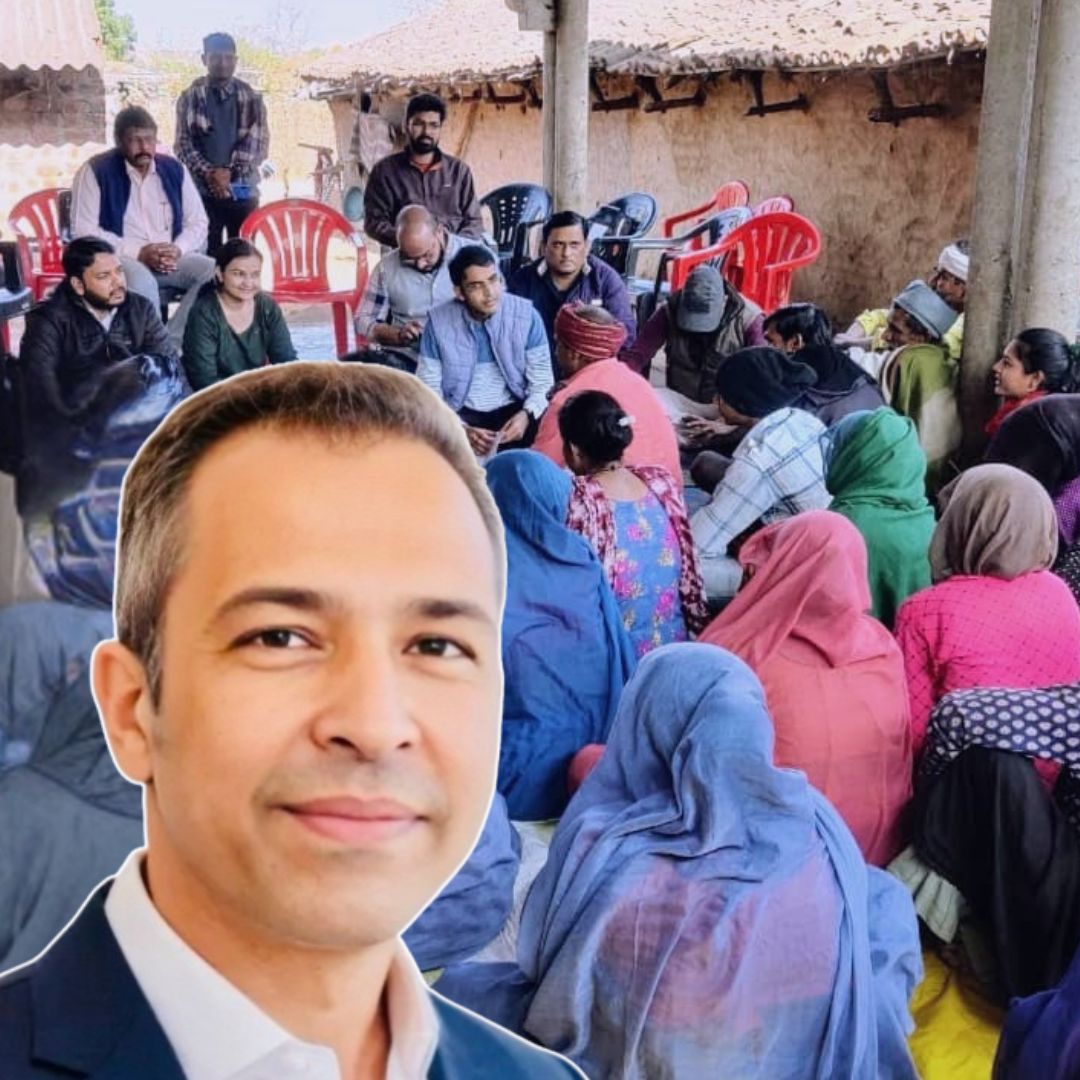

In Trivandrum, in a joint family of 40, Balaji Ganapathy learned his first lesson in resourcefulness before he could spell the word. “I don’t remember buying a new book until college. Everything was borrowed, shared, passed down. My father’s friends’ children’s textbooks became my library. My cousins’ notes became my study guides”, he says.
But scarcity taught him something that abundance never could: that dignity is not diminished by sharing. That poverty is not the absence of money but the absence of opportunity. And that what you give away often matters more than what you keep.
These weren’t lessons from a classroom. They were lessons from a household where 40 people figured out, every single day, how to make less become enough.
Roots in Resourcefulness
As a teenager, Balaji traveled across India in unreserved general compartments, pressed shoulder to shoulder with migrant workers, farmers, students, and dreamers.
“In those compartments, I saw India. Not the India of headlines, but the real India. People who had nothing but were happy to share. People ready to do what it takes to earn a living. For dignity. For their children.”
One journey crystallized something that would take decades to articulate: Everyone is born with equal potential but unequal opportunity. Access to opportunity is the greatest equalizer.
That insight became his North Star.

The Engineer Who Chose People
From a sheltered small town, Balaji’s engineering spark ignited early. At the College of Engineering, Trivandrum, Balaji designed a hydrogen fuel cell car with clean drinking water as its emission. This was the 1990s, before “sustainability” became a boardroom buzzword.
But here’s the twist: the young engineer realized that innovation without adoption is just a prototype gathering dust.
“Any innovation created is only as good as adopted. Technology doesn’t change the world. People adopting technology changes the world:, he shares in conversation with The Logical Indian.
So he pivoted. From machines to humans. From engineering to HR. From technical systems to human systems.
At XLRI Jamshedpur, immersed in the Tata legacy, he studied what makes organizations endure. He devoured Good to Great and asked a different question: What makes organizations good for the world?
The 2008 Crucible
After several exciting years with TCS in India, Balaji landed in America during the worst financial crisis since the Great Depression. New country. New role. Economy in freefall.
“In tough times, people don’t see the solutions you bring to the table. They see whether you’re trustworthy and bring value.. Tata was doing extraordinary community work, but the impact wasn’t seen locally”, he reflects.
Crisis became catalyst. He began building strategic partnerships with leaders who believed in “putting community at the center.” What started as business survival became a calling: proving that companies that serve society don’t just survive downturns, they emerge stronger.
Architecting Impact at Scale
Rising to Chief Social Responsibility Officer at TCS, Balaji led a 200-member team with one obsession: finding the intersection of highest need and lowest resources. “Most CSR goes to places that are already resourced. We went the opposite direction. Where is the need most acute? Where are resources most scarce? That intersection is where change happens.”
The results speak volumes in numbers: $650 million in community investment, 30+ million lives touched across 55 countries, 20 million volunteer hours mobilized, $40 million in pro bono value delivered, 188 shared value partnerships activated, and 11,000 cross-sector leaders convened. But as Balaji emphasizes, numbers are just scorecards. The programs are the real story, weaving tangible change through literacy, skills, employment, and last-mile empowerment that elevate dignity and opportunity for millions.
Literacy as a Service (LaaS): Began as adult literacy and evolved into holistic livelihoods: functional skills, financial literacy, digital capability delivered in nine vernacular languages. When COVID hit, women who learned tailoring through the program started earning daily wages. 2.4 million lives transformed, with a goal for 100 million more..
goIT and Ignite My Future: Brought computational thinking to 5+ million students globally, in a world where only 60,000 students were graduating in tech fields annually in the US, and where girls in India were dropping out of STEM at alarming rates. That’s driving evidence based efforts to reach 50 million.
The Youth Employment Program (YEP): Didn’t just create pipelines to existing jobs. It created pathways where none existed.
“It’s easy to link people to existing systems. It’s hard to blaze trails where nothing exists.”
The program achieved 27-30% placement rates while some government schemes struggled to hit 15%, with ambition to connect 10 million Indians to employment.
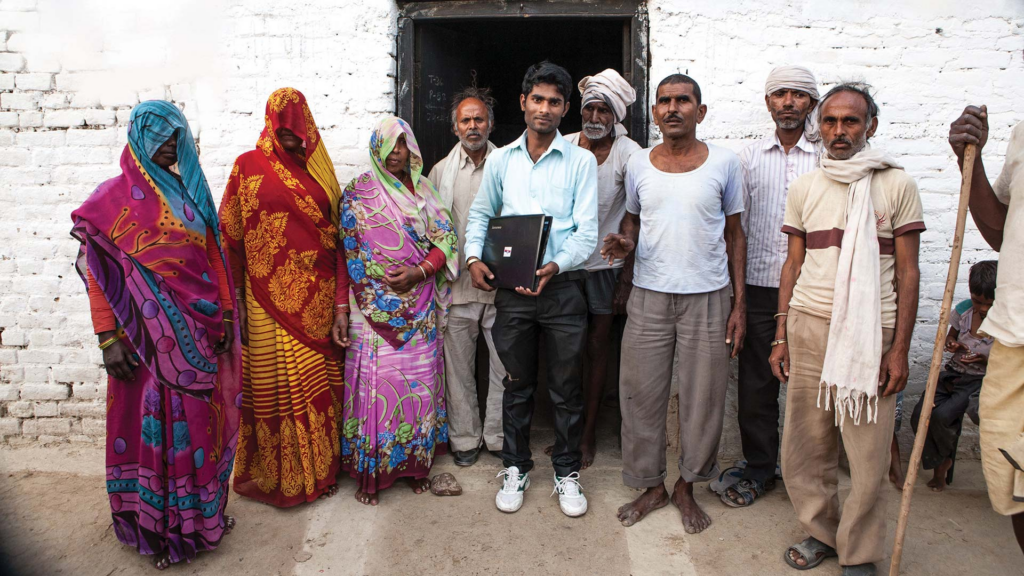
BridgeIT: May be his most audacious reimagination: taking ostracized youth, many from Dalit and marginalized communities, once excluded from classrooms or homes, and turning them into digital entrepreneurs serving 7,000+ villages with over 160 IT-enabled services.
“Nobody is looking for charity. They are looking for dignified work. When you give someone that, they build concrete homes, employ neighbors, start ancillary businesses. They become the change.”
Building Teams That Build Movements
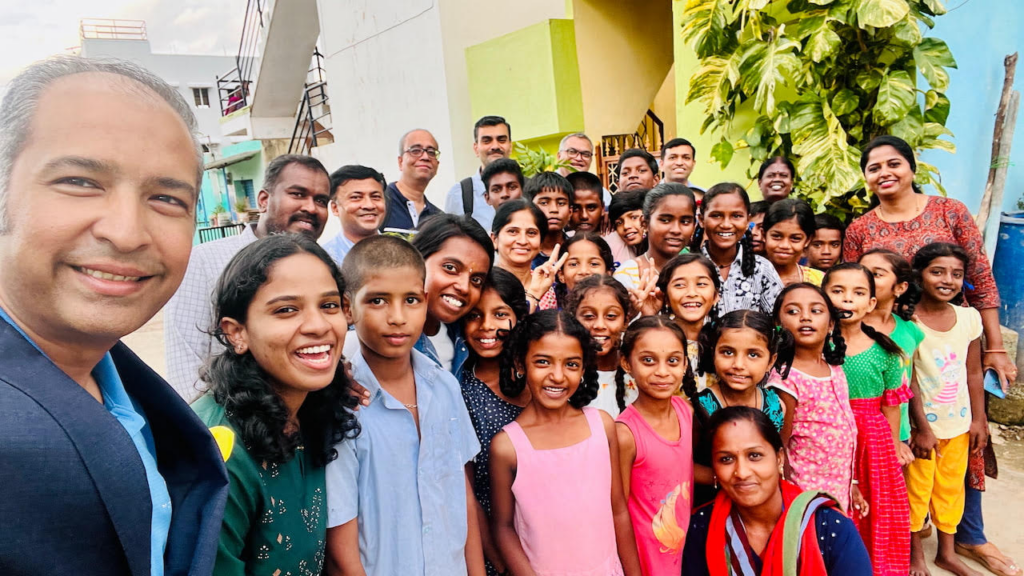
But Balaji’s impact extended far beyond TCS’s own programs. He understood early that lasting change requires mobilizing ecosystems, not just organizations.
“A company, no matter how large, is limited by its own boundaries. Real scale comes when you build teams that build other teams. When you create movements that outlive any single initiative.”
Under his leadership, TCS’s corporate purpose model became a blueprint for cross-sector collaboration: 344,000+ employees engaged across 48 business units, contributing 20 million+ hours and $40 million in pro bono value. But more importantly, creating a culture where everyone’s purpose & capabilities became connected with local community needs.
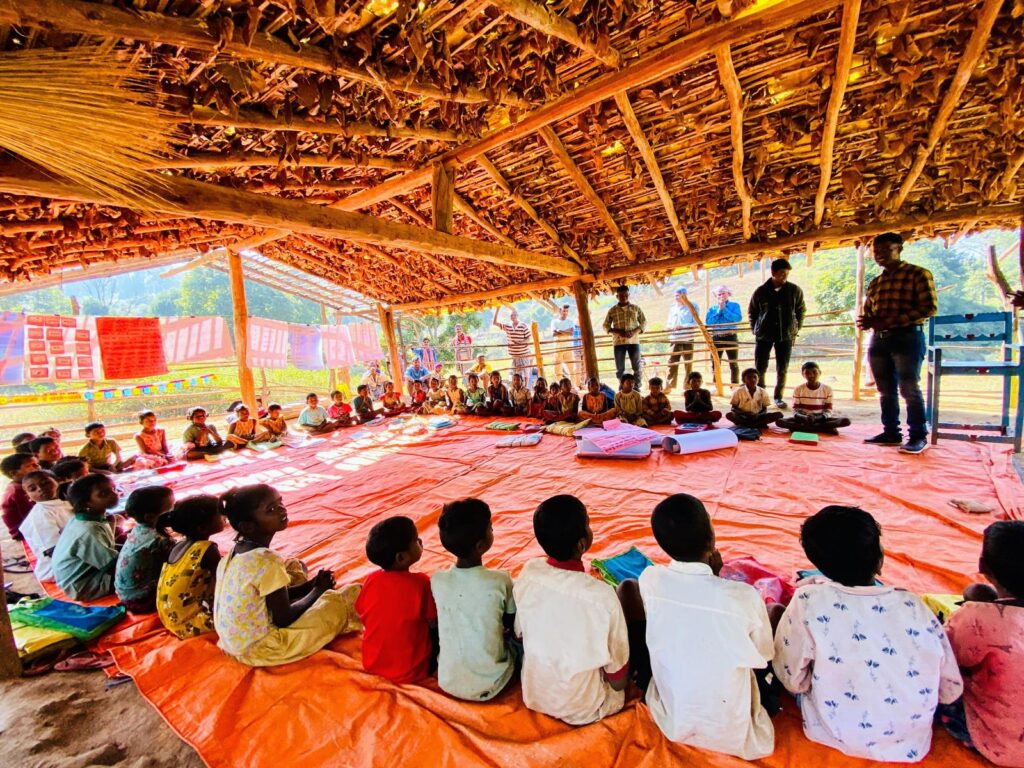
The Purpose Ecosystem and Leadership Engine
The Purpose Ecosystem comprises 188 shared value partnerships spanning nonprofits, government agencies, academic institutions, and peer corporations. “We learned that no single organization can solve systemic problems. But networks of organizations can,” Balaji notes. Complementing this, Digital Empowers convened 11,000 cross-sector leaders through forums, working groups, and collaborative initiatives. These weren’t conferences. They were incubators for collective action, policy, and advocacy. Through Policy Influence, from contributing to India’s development policies to advising the World Economic Forum, U.S. Chamber Foundation, and Commission on Asian Philanthropy, Balaji helped shape frameworks that scale evidence-based impact globally.
“The ultimate measure of impact isn’t what your company does. It’s what your company enables others to do. That’s the multiplier effect.” This philosophy, from company to country to global ecosystem, became the template for what came next.
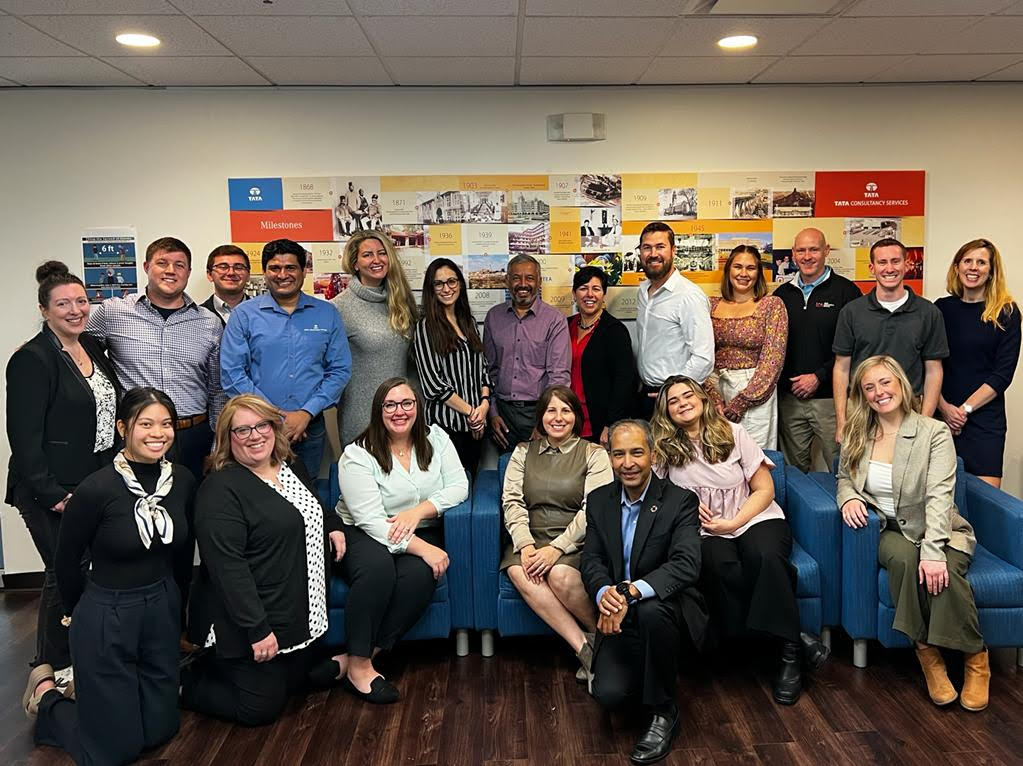
The Common Thread Across Continents
After 26 years spanning 55 countries, some patterns emerged: “Three things are universal. First, people everywhere want the same thing: dignity, opportunity for their children, a sense that tomorrow can be better than today. Second, the biggest barriers are never technical. They’re systemic: access, bias, visibility. Third, lasting change requires building leaders, not just programs.”
That last insight became the foundation for what came next.
The New Journey
In 2025, after more than two decades stewarding one of the world’s largest corporate social impact portfolios, Balaji made a leap.
He founded Social Positive, an AI-native impact advisory practice built on a simple conviction: Purpose is the new Tech.
The problem is clear: $2.3 trillion flows each year from companies, foundations, and philanthropists into CSR and community development. Yet massive gaps persist between those who need the most and those who have the most.
Legacy approaches miss connecting the dots: Needs to funding (capital exists, but doesn’t reach the last mile); Strategy to execution (PowerPoints don’t change lives); Implementation to impact (activity is not the same as outcomes); Evidence to scale (proof without pathways goes nowhere). Balaji’s framework addresses these precisely, driving real-world transformation.
Social Positive bridges these gaps. From the last mile to the first mile.
“Every company is racing to become a technology/AI company. But technology alone doesn’t create longevity. In the 1950s, Fortune 500 companies lasted 50 years. Today? Fourteen years. The companies that will exist in 50 years are the ones integrating purpose into their DNA, not their CSR reports.”
The firm serves corporates, foundations, philanthropists and family offices seeking measurable impact. It has a particular specialty: helping Global Capability Centers (GCCs) align US headquarters strategy with India operations and supporting organizations working across US-India-Asia.
“We don’t just do strategy. We stay to build the leaders, organizations, systems, and capacity to launch programs. We orchestrate across the impact ecosystem, from boardrooms to policy tables. And we measure, prove, and report results that boards can stand behind.”
The approach is powered by AI tools, field experience, and executive judgment, bringing the Tata legacy of building leaders, teams, and institutions that serve society with humility and a pioneering spirit.
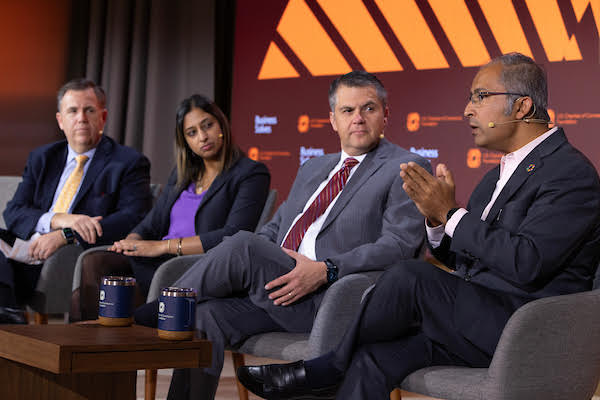
Building the Next Generation of Impact Leaders
In partnership with the Institute of Philanthropy and HKU Business School, Balaji is launching LEAP (Leadership Excellence in Asian Philanthropy), a transformational six-month executive program for philanthropic leaders across Asia.
“Asia is home to 60% of humanity. The wealth is here. The need is here. But the professional infrastructure to bridge the two? That’s what’s missing”, he adds.
LEAP represents the culmination of everything Balaji has learned about building movements: that programs without leaders fade, but leaders build institutions that outlast any single initiative. The program will develop leaders who can navigate complexity, build bridges, and create sustainable change across the region.
“We’re not training grant-makers. We’re building ecosystem architects. Leaders who understand that philanthropy in Asia must be rooted in Asian values while embracing global best practices.”
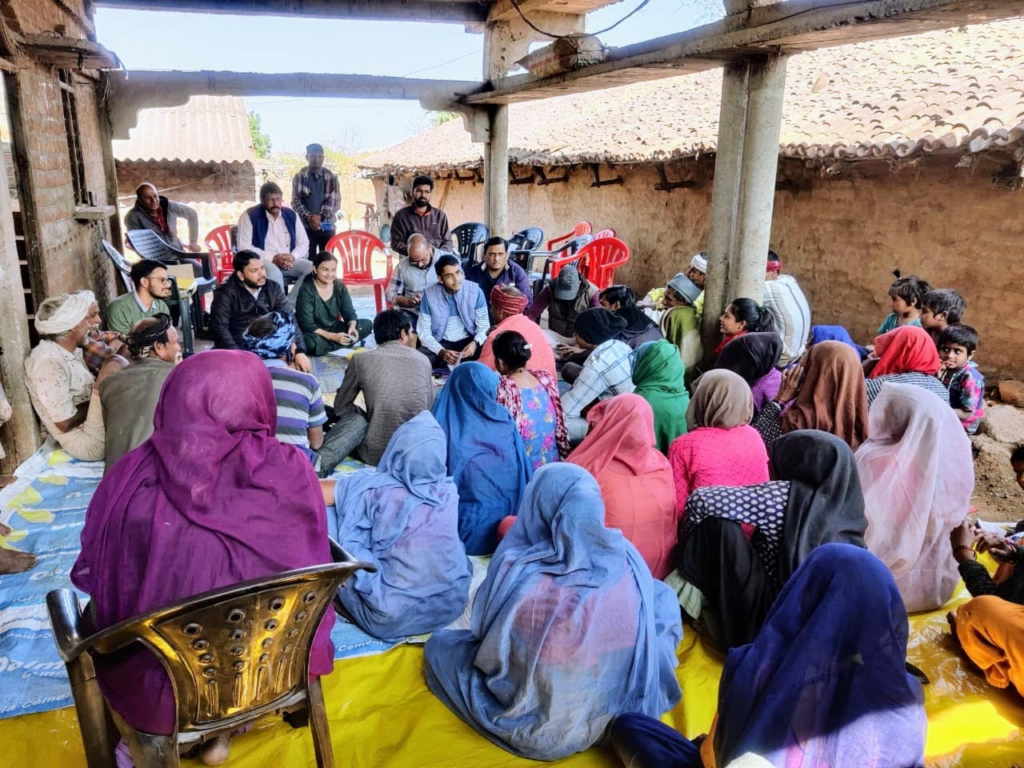
Advice for Those Starting Out
For young Indians wanting to blend career success with social purpose, Balaji’s counsel is characteristically practical: “Don’t wait for the perfect job that combines both. Start where you are. Volunteer. Build skills. Observe what breaks your heart and what you’re uniquely positioned to fix. Purpose isn’t something you find. It’s something you build, one decision at a time.”
He pauses, then adds:”And remember: the future belongs to organizations that are carbon negative and social positive. If you can help companies get there, you’ll never lack for meaningful work.”
The Road Ahead
Today, Balaji serves on boards and advisory councils spanning the World Economic Forum, U.S. Chamber Foundation, Commission on Asian Philanthropy, and Chief Executives for Corporate Purpose. He advises foundations, speaks at Stanford and Harvard, and mentors the next generation of impact leaders.
But ask him what success looks like, and the answer is pure Trivandrum: “Success is when the leaders we build, build other leaders. When the teams we create, create other teams. When the institutions we help, help other institutions. That’s the multiplier effect. That’s generational change.”
He returns to the joint family lessons from his elders, where sharing a book meant everyone could learn from it.
“Scale isn’t about doing more. It’s about enabling more. Grassroots impact, population scale. That’s always been the vision.”
The Logical Indian’s Perspective
Balaji Ganapathy exemplifies purpose-driven leadership that turns corporate scale into grassroots equity. His data-led interventions prove one engineer’s vision can bridge India’s last-mile divides, inspiring a new generation to measure success not just in profits, but in dignity restored and opportunities unlocked.
If you’d like us to feature your story, please write to us at csr@5w1h.media