




Khudiram Bose, one of the youngest revolutionaries associated with India’s freedom struggle, was remembered on August 11, 2026, marking 118 years since he was executed by the British in Muzaffarpur at the age of 18. Born in Midnapore, Bengal, in 1889, Bose became involved in anti-colonial revolutionary activity as a teenager and joined the Anushilan Samiti at around 15. On April 30, 1908, he and fellow revolutionary Prafulla Chaki attempted to assassinate British magistrate Douglas Kingsford in Muzaffarpur.
However, they mistakenly targeted the wrong carriage, killing two British women who were travelling in it. Bose was arrested, tried and sentenced to death, while Chaki died by suicide when confronted by police. His story continues to be remembered as one of youthful courage and sacrifice in the freedom struggle, although the civilian deaths caused by the bombing remain an essential part of the historical record. In a December 2025 tribute, Union Home Minister Amit Shah described Bose as a “symbol of valor, courage and sacrifice” and said his story remained an inspiration for the country’s youth.
A Teenager Joins The Struggle
Khudiram Bose’s story began long before the Muzaffarpur bombing. Born in Midnapore, Bengal, he was drawn towards the anti-colonial movement while still young. The political atmosphere following the 1905 Partition of Bengal intensified opposition to British rule and contributed to the growth of revolutionary organisations. By around the age of 15, Bose had joined the Anushilan Samiti, becoming involved in a form of resistance that was very different from the mass, largely non-violent movements that would later dominate India’s freedom struggle.
Contemporary and later accounts have also highlighted his youthful idealism and concern for ordinary people, helping explain why his memory has endured beyond the circumstances of his death. His age remains central to understanding the story: he was still a teenager when his political commitment had already placed him on a path towards imprisonment and death.
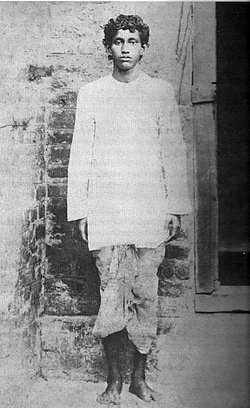
The Muzaffarpur Bombing
The turning point came on April 30, 1908, when Bose and Prafulla Chaki attempted to attack Kingsford, a British magistrate who had become a target of revolutionary groups because of his actions against Indian nationalists. The two revolutionaries believed they had identified Kingsford’s carriage, but the vehicle they attacked was carrying two British women instead. Both were killed. Bose fled the scene and was subsequently arrested at Waini railway station, while Chaki died by suicide when police closed in on him.
Bose’s trial began on May 21, 1908, and despite efforts by his defence lawyers, he was convicted and sentenced to death. He was executed at Muzaffarpur on August 11, 1908, aged just 18. Accounts of his composure before his execution helped shape the enduring image of Bose as a fearless young revolutionary. More than a century later, tributes continue to mark his death anniversary, keeping his name within the wider public memory of India’s independence movement.
The Logical Indian’s Perspective
Khudiram Bose’s story deserves to be remembered with both empathy and historical honesty. His youth, courage and willingness to sacrifice his life in opposition to colonial rule help explain why he became such a powerful symbol for generations of Indians. At the same time, remembering his courage should not require us to romanticise the violence that led to his execution or overlook the two civilians who lost their lives because the wrong carriage was targeted.
India’s freedom struggle was shaped by many forms of resistance, and understanding that history means making space for its courage, contradictions and human costs. Bose was only 18 when his life ended, leaving behind a future he never had the chance to experience. Perhaps the most meaningful way to remember him today is to recognise both the young person who resisted an oppressive system and the consequences of the path he chose.
How should we remember historical figures whose courage and sacrifice are inseparable from difficult and painful consequences?
Read More: Meet Ram Gopal Kothari, First Indian To Complete North Pole And Volcano Marathons


