

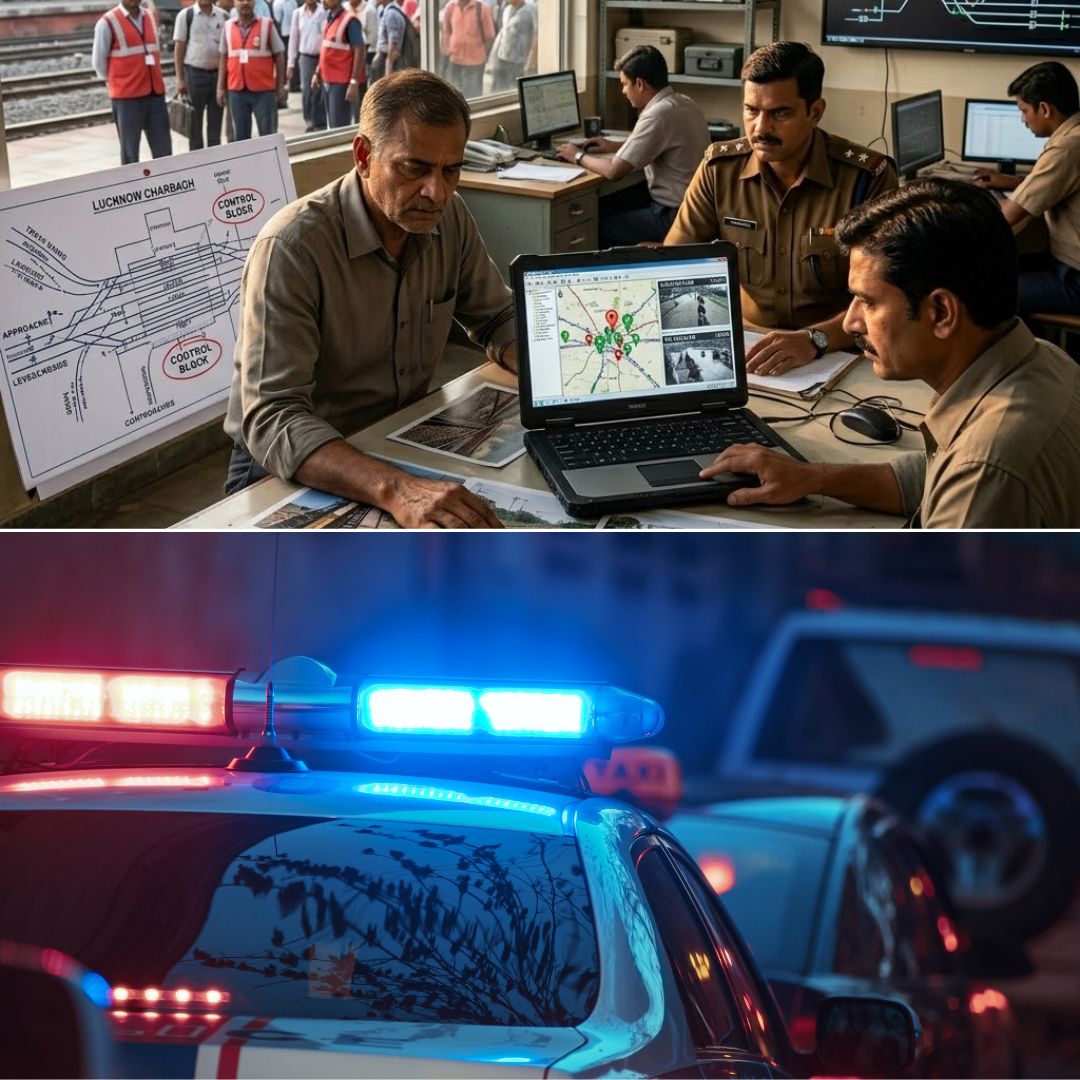

A suspected terror plot targeting railway infrastructure and commercial establishments in Uttar Pradesh has been foiled after the Uttar Pradesh Anti-Terrorism Squad arrested four men allegedly linked to handlers connected with Pakistan’s intelligence network. Officials said the group, led by Saqib alias Devil from Meerut, was in contact with a Pakistan-based handler linked to the Inter-Services Intelligence (ISI).
Investigators claim the accused were planning to set fire to a railway signal box near Lucknow railway station in an attempt to disrupt train movement and potentially trigger a major accident. Authorities also allege the group was plotting arson attacks on trucks carrying gas cylinders and vehicle showrooms to cause economic damage and panic.
Acting on intelligence inputs, the ATS arrested the four suspects before the alleged plan could be executed. The accused have been produced before a special court, and investigators have sought further custody to probe the funding trail, online communications and possible links to a wider network.
Railway Sabotage Plot Under Probe
According to officials, the alleged module had been operating under instructions from handlers based outside India and communicating through encrypted platforms such as Telegram, Signal and Instagram. Investigators say the main accused, Saqib alias Devil, a 25-year-old resident of Meerut district, was in regular contact with foreign numbers and individuals suspected to be linked to extremist networks.
Authorities claim the handler would send screen recordings and Google location details of potential targets, after which the accused would visit those sites, take photographs and videos, and send them back as reconnaissance material.
Officials further allege that the suspects conducted surveillance across several cities including Lucknow, Ghaziabad and Aligarh, documenting railway infrastructure, vehicle showrooms and other public establishments. The ATS said the group’s plan included setting fire to a railway signal box near the Lucknow railway station area.
Such an attack, investigators said, could have disrupted signalling systems, halted train operations and potentially caused accidents, leading to widespread panic among passengers and residents. Acting on intelligence alerts and surveillance, the ATS intercepted the suspects before the alleged attack could be carried out.
Radicalisation, Recruitment And Alleged Arson Plans
Authorities believe the accused were influenced through online propaganda and extremist narratives circulated by foreign handlers on social media platforms. Investigators say the suspects were encouraged to target vehicles, public assets and critical infrastructure in order to spread fear and destabilise public order. Officials also allege that the group was tasked with collecting information about key institutions and political figures and sharing that data with handlers outside the country.
Apart from railway sabotage, the accused were allegedly planning arson attacks on trucks transporting gas cylinders and vehicle showrooms to cause economic disruption. Preliminary findings suggest the group may have carried out minor acts of arson earlier and sent videos of those incidents to their handlers in exchange for money transferred through digital payment systems such as QR codes.
The four arrested suspects have been identified as Saqib alias Devil and Arbaab from Meerut district, along with Vikas Gehlawat alias Raunak and Lokesh alias Papla Pandit from Gautam Buddh Nagar. Officials say the arrests were made after intelligence agencies tracked suspicious communications and movements linked to the group.
A case has been registered at the ATS police station in Lucknow under provisions of the Unlawful Activities (Prevention) Act and the Bharatiya Nyaya Sanhita. The accused have been produced before a court, and investigators are seeking custody to examine their digital devices and trace the alleged funding network.
The Logical Indian’s Perspective
The alleged plot highlights the continued challenges posed by cross-border radicalisation, digital propaganda and attempts to target public infrastructure. Railway networks are among the most critical lifelines in India, connecting millions of people daily, and threats to such systems can have serious human and economic consequences. At the same time, cases like these also underscore the importance of transparent investigations, responsible reporting and due process to ensure that justice is served while maintaining public trust.
Also read: CBSE Curriculum Reform: Optional Advanced Maths & Science Papers For Students Starting 2026-27


