


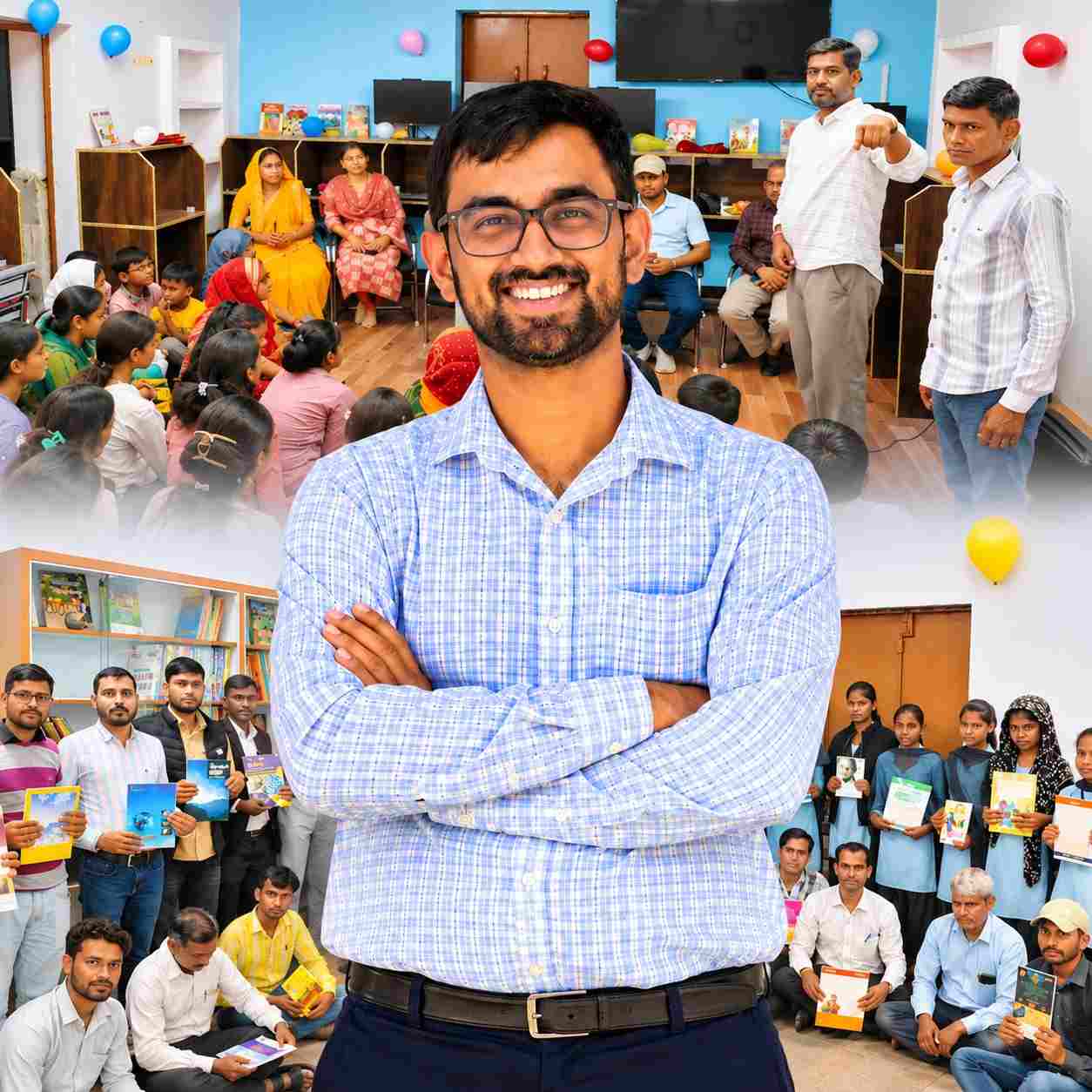

Visionary administrator Nivrutti Avhad Somnath established Digital Samvidhan Ghars across Dholpur libraries as an inspiring IAS officer initiative driving Rajasthan rural education through the abandoned buildings transformation, appointing every Samvidhan Sakhi, developing Chambal ravines development projects, founding community learning centres for competitive exam prep, championing rural girls education, pioneering public property reuse under Zila Parishad Dholpur models, fostering grassroots empowerment, and building village digital hubs.
In remote rural pockets where students previously depended on expensive urban centers for coaching and internet access, local governance is redefining what is possible when public infrastructure meets community resolve.
Reclaiming Neglected Public Assets
During field visits across rural Dholpur as part of a constitutional awareness campaign in 2025, IAS officer Nivrutti Avhad noticed a recurring pattern of neglect. Across numerous villages, former school buildings, abandoned panchayat halls, and old health outposts lay empty, frequently overrun by wild vegetation or used as unauthorized cattle shelters.
Rather than letting these public properties decay further, Avhad envisioned a creative administrative pivot: retrofitting these idle structures into modern community learning spaces. He named them Samvidhan Ghars, or Houses of the Constitution, to anchor the initiative in values of equality, justice, and universal access. The initial phase successfully converted eighteen unused public buildings into functional reading rooms, laying the groundwork for a district-wide digital network.
Building Comprehensive Digital Hubs
As word of the first libraries spread, surrounding villages began petitioning the district administration for their own centers, often offering financial contributions and vacant halls to accelerate the process. Corporate social responsibility grants from organizations like SBI Card and IIFCL, alongside local development funds, enabled the administration to expand the network to seventy-eight fully equipped digital libraries.
These centers offer far more than quiet reading space. Each Samvidhan Ghar is outfitted with computers, smart televisions, QR-coded library catalogues, printers, solar power units, CCTV security, and RO drinking water systems. Open from early morning until late at night, the facilities accommodate the diverse schedules of rural students who balance household chores or agricultural work with exam preparation.
Empowerment Through Samvidhan Sakhis
A critical factor in the initiative’s success is its governance structure. Every library is managed by a ‘Samvidhan Sakhi’, a local woman appointed from village self-help groups. These women oversee daily operations, maintain attendance records, and ensure the centers remain safe and welcoming.
This intentional leadership choice has fundamentally shifted community dynamics. In many rural households, families hesitate to send young women outside the district for studies due to safety concerns. By placing local women in charge of safe, neighborhood learning hubs, the Samvidhan Ghars have made higher education and competitive exam preparation genuinely accessible for girls and married women across Dholpur.
Fostering Genuine Community Ownership
Avhad insisted that no village receive a library entirely for free. Communities were required to contribute through labor, furniture, or locally raised funds, reinforcing the principle that public institutions thrive only when citizens feel personal ownership. Villagers who once felt entirely disconnected from administrative support now proudly protect and maintain their local study spaces.
Today, over five thousand registered students utilize these centers daily, preparing for rigorous examinations including UPSC, RAS, NDA, and teaching certification tests. Abandoned structures that once symbolized administrative absence have become beacons of hope, proving that targeted governance can alter the life trajectories of rural youth.
The Logical Indian’s Perspective
Nivrutti Avhad Somnath’s initiative in Dholpur demonstrates how creative leadership can revitalize public administration. By turning neglected government buildings into vibrant digital libraries managed by local women, the Samvidhan Ghars have bridged urban-rural educational divides. Replicating such community-driven models across rural India remains essential for empowering the next generation of changemakers.
How can district administrations across India better collaborate with rural communities to repurpose idle public buildings into sustainable educational assets?
Also Read: How Hemant Sachdev Built a Lifesaving Mountain Rescue Network for Indian Soldiers


