




From building a massive digital presence to reaching flood-affected communities on the ground, Hussain Mansuri’s relief efforts highlight how social media influence can be channelled towards humanitarian action.
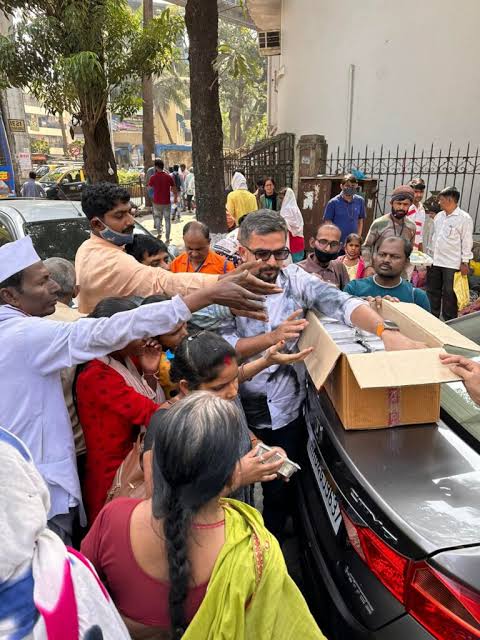
Social media personality and entrepreneur Hussain Mansuri has drawn attention after documenting relief work for families affected by severe flooding across Vasai, Nallasopara and the wider Vasai-Virar region of Maharashtra. As days of intense monsoon rainfall submerged neighbourhoods, disrupted electricity and communication networks, and left residents struggling for basic necessities, Mansuri and his team were seen visiting affected communities and providing assistance on the ground.

Mansuri shared visuals of the initiative on social media under the description “Vasai-Nallasopara flood relief work”. Similar footage appeared across Instagram, Facebook and YouTube. Related public posts also thanked Mansuri and his team for visiting affected families and providing immediate support.
The initiative came amid a wider monsoon emergency in Maharashtra’s Palghar district. Heavy rainfall over successive days caused extensive flooding and waterlogging across residential colonies and low-lying areas. Reports described homes and roads under water, prolonged electricity cuts, disrupted mobile and internet connectivity, and difficulties accessing drinking water and essential supplies.

While the exact number of families assisted and the quantity of relief material distributed have not been independently established through official records, publicly available posts support Mansuri’s participation in on-ground relief work.
From Digital Reach To On-Ground Relief
Hussain Mansuri has built a substantial social media presence through content focused on humanitarian assistance and support for people facing financial hardship. His public accounts regularly feature interactions with individuals and families in difficult circumstances, documenting acts of food distribution and other forms of assistance.
His Vasai-Nallasopara relief work followed a similar approach but unfolded during a major regional flood crisis. Publicly shared footage documented Mansuri’s presence among affected communities, while related posts expressed gratitude to him and his team for reaching families on the ground.
For residents, the crisis extended far beyond waterlogged roads. Extended power cuts and communication disruptions made it difficult for families to contact relatives and access timely information. Reports also highlighted difficulties obtaining drinking water, milk and vegetables as flooding affected local transport and supply networks.

The broader emergency triggered rescue operations involving disaster-response personnel and the Vasai-Virar City Municipal Corporation. Media reports said more than 200 people were rescued in the region as floodwaters created dangerous conditions. Rescue teams reportedly used ropes to help residents move through areas affected by strong water currents.
The floods also resulted in fatalities, with incidents of people being swept away or drowning after falling into inundated canals and drains. These deaths were linked to the wider monsoon crisis and have not been connected to Mansuri’s specific relief initiative.
Against this backdrop, community volunteers and individual relief efforts emerged alongside the official emergency response. Mansuri’s documented intervention formed part of this broader effort to provide immediate assistance to affected families.
When Digital Influence Meets Humanitarian Action
Social media has transformed how humanitarian crises reach the public. Floods and other disasters can now be documented in real time, bringing images from affected neighbourhoods to millions of people within hours.
For creators with large audiences, this visibility carries influence. Their platforms can highlight local emergencies, amplify the experiences of vulnerable communities and encourage others to support relief efforts.
Mansuri’s online content has frequently centred on visible acts of assistance. His flood relief reel similarly focused on reaching people affected by an emergency and documenting their circumstances.
However, social media-driven humanitarian work also requires transparency and verification. A viral video can establish that assistance took place, but may not provide enough information to independently determine the scale of an initiative.
In Mansuri’s case, publicly available information does not clearly establish the exact number of beneficiaries, the quantity of supplies distributed or the total expenditure involved. There is also no publicly verified information confirming whether the relief operation was formally coordinated with municipal authorities or government disaster-response agencies.
Based on available information, Mansuri and his team were present in flood-affected areas and participated in relief activity. The precise scale and long-term impact of the intervention would require further documentation.
A Region Struggling With Severe Flooding
The relief effort came as Vasai-Virar faced days of widespread disruption. Intense rainfall inundated roads and residential areas, while some neighbourhoods reportedly experienced floodwater several feet deep.
Power outages continued for extended periods in parts of the region. Mobile and internet connectivity was affected, adding to the difficulties faced by residents dealing with flooded homes and disrupted transport.

The Western Railway suburban network, a crucial transport lifeline for the Mumbai Metropolitan Region, also faced disruptions around Vasai and Nallasopara. The flooding renewed concerns about the vulnerability of rapidly urbanising areas during extreme rainfall.
Following the severe waterlogging, Western Railway announced plans to raise track levels at Nallasopara and Vasai as part of a phased flood-mitigation initiative aimed at reducing future disruption.
The crisis once again raised wider questions about urban resilience, drainage capacity and disaster preparedness. While immediate relief can support families during the first days of an emergency, long-term protection requires stronger infrastructure, effective urban planning and coordinated disaster-management systems.
Relief Beyond The Camera
Humanitarian content exists at the intersection of visibility and public service. Social media can amplify the experiences of people whose struggles may otherwise remain outside wider public conversations. At the same time, responsible humanitarian storytelling requires dignity, transparency and a clear focus on affected communities.
For creators documenting assistance, the challenge is ensuring that people experiencing hardship remain at the centre of the story rather than becoming background figures in viral content.

Mansuri’s Vasai-Nallasopara relief reel drew attention to communities navigating flooded homes, interrupted electricity and difficulties accessing essential supplies. It also demonstrated how people with significant digital reach can move beyond online engagement and participate in physical relief efforts.
Yet the larger story remains that of residents across Vasai, Nallasopara and Virar who faced days of uncertainty, disrupted livelihoods and concerns over food, water and personal safety.
The Logical Indian’s Perspective
Hussain Mansuri’s participation in relief work amid the Vasai-Nallasopara floods highlights how digital influence can extend beyond screens and contribute to humanitarian action during moments of crisis.
When social media visibility is combined with responsible on-ground action, transparency and respect for people’s dignity, digital platforms can become meaningful tools for social good. At the same time, humanitarian work must remain centred on communities rather than publicity, with clear information helping strengthen trust and accountability.
India’s recurring monsoon emergencies also remind us that individual relief efforts, however valuable, cannot replace resilient infrastructure and effective public disaster management. Citizens and volunteers can strengthen emergency responses, but governments and institutions remain responsible for building safer cities and protecting vulnerable communities.
Encouraging individuals to use their influence with empathy, responsibility and transparency can help create a culture where visibility is measured not simply through views and followers, but through the ability to draw attention and meaningful support towards people facing hardship.
Also Read: Dr. Prakash Amte: The Doctor Who Chose a Life of Service for India’s Most Remote Tribal Communities


