


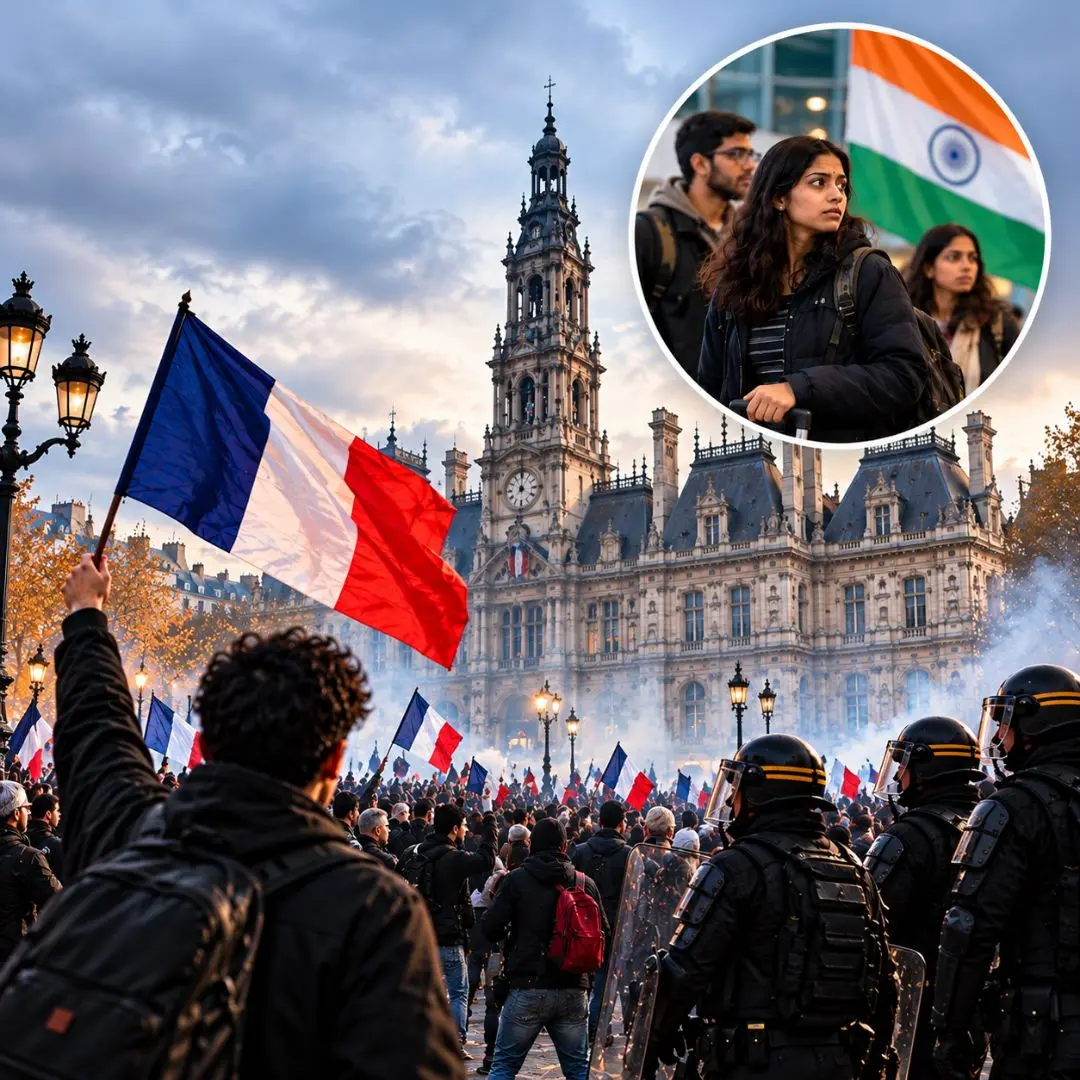

France witnessed widespread unrest on October 17 as demonstrations against rising living costs, deteriorating public services and worsening school conditions escalated into clashes, arson and looting across several cities. According to French Interior Minister Laurent Nuñez, approximately 5.5 lakh people participated in protests nationwide, while more than 1,200 people were arrested and 150 police officers injured.
Historic buildings, shops and public infrastructure were damaged, including the town hall in Limoges. President Emmanuel Macron vowed strict action against those responsible, while Prime Minister Sébastien Lecornu condemned the violence. The unrest has raised concerns about public safety and potential travel disruptions, particularly for Indians living, studying or travelling in France.
Clashes Escalate Nationwide
The demonstrations, which brought together students, workers, trade union members and other groups, reflected growing frustration over the rising cost of living and declining quality of public services. What began with students highlighting deteriorating conditions in schools expanded into a broader expression of economic discontent, with protesters raising concerns about the affordability of everyday essentials, wages and access to essential services.
The French Interior Ministry estimated that approximately 5.5 lakh people participated in demonstrations across the country, including around 1.1 lakh in Paris. Organisers put the nationwide turnout higher, at approximately 8 lakh. Although many demonstrators marched peacefully, violence broke out in several locations as groups clashed with police, set fires and looted businesses. In Paris, shops and vehicles were targeted, while police used tear gas and water cannons to disperse crowds in some areas. Incidents were also reported in Marseille, Lyon, Bordeaux and other cities.
One of the most striking incidents occurred in Limoges, where a fire engulfed the historic town hall, causing extensive damage to the building. Authorities said masked individuals broke into the premises and set it alight. The incident underscored how the unrest had moved beyond street demonstrations to attacks on public infrastructure. French officials subsequently reported more than 1,200 arrests and injuries to 150 police officers, highlighting the scale of the security challenge facing the authorities.
Macron Vows Strict Action
President Emmanuel Macron condemned the violence and promised legal action against those responsible for attacking public buildings and businesses. In a social media statement, he said, “Those who have vandalised and attacked prefectures and shops alike, and even looted our town halls, will be prosecuted and punished.” He also expressed support for law enforcement personnel and argued that violence was preventing people from exercising their right to demonstrate peacefully.
Prime Minister Sébastien Lecornu similarly condemned the attacks, distinguishing between legitimate public grievances and criminal acts. He warned that the government would not allow violence to intimidate authorities or determine the country’s political direction. The government has also faced questions about how it will address the underlying economic and public-service concerns that brought thousands onto the streets. While authorities have emphasised public order and accountability, protesters and supporting organisations have drawn attention to the pressures facing households, workers and students.
The demonstrations have also revived comparisons with France’s 2018 Yellow Vest movement, which began over fuel prices and developed into a wider protest against economic inequality and government policies. However, the participation of different groups in the latest unrest does not mean all demonstrators supported violence. The distinction between peaceful protesters and those involved in arson, looting or assaults remains important when assessing the events and their political implications.
What Indians Need Know
The developments are relevant to Indians living, studying, working or travelling in France, particularly those in Paris and other cities where clashes have been reported. France hosts Indian students, professionals, tourists and members of the wider Indian diaspora, many of whom rely on public transport to commute to universities, workplaces, airports and tourist destinations. Although the reported unrest does not establish that Indian nationals have been specifically targeted, demonstrations and police operations can create practical difficulties for anyone in affected areas.
Travellers may encounter temporary road closures, changes to public transport services, restricted access to city centres and delays in reaching airports or railway stations. Students and working professionals could also face disruptions to classes, examinations, office commutes and other scheduled activities if local authorities restrict access to affected areas. Indians planning to visit France should check the latest information from transport operators, airlines, universities and local authorities before setting out. Those already in the country should avoid protest sites and areas where crowds are gathering, follow police instructions, keep identification and important travel documents accessible, and allow additional time for essential journeys.
Anyone facing an emergency should contact the appropriate local emergency services and seek assistance from the Indian Embassy in Paris or the relevant Indian consulate. These are precautionary measures rather than an indication that all of France is unsafe or that travel to the country has been suspended. The situation may vary considerably between cities and neighbourhoods, making local updates more useful than broad assumptions about conditions across the country. Indians should also verify flight and rail arrangements directly with their service providers instead of relying solely on social media posts or unconfirmed reports.
The Logical Indian’s Perspective
The protests in France highlight the importance of addressing economic insecurity, deteriorating public services and citizens’ concerns through meaningful dialogue and accountable governance. Rising living costs and inadequate public services can place enormous pressure on families, students and workers, and their grievances deserve to be heard without dismissal.
At the same time, arson, looting and attacks on public buildings undermine peaceful protest, endanger lives and can divert attention from the issues demonstrators seek to raise. Protecting the right to dissent must go hand in hand with safeguarding public safety, respecting the law and ensuring that police responses remain proportionate and accountable.
For Indians living or travelling in France, staying informed, exercising caution and showing consideration for local communities are equally important during periods of unrest. Sustainable change requires authorities to engage constructively with citizens while ensuring that peaceful demonstrators are not held responsible for the actions of violent groups. How can governments address the economic concerns driving public protests while protecting the right to peaceful dissent and keeping communities safe?
🇫🇷France erupts. Fuel prices, living costs, crumbling schools and a budget plan freezing benefits brought 550,000 onto the streets, by the government’s own count. From Paris to Dijon, the chant was "Macron DEMISSION." Then came 1,200 arrests, 150 police hurt and Limoges’ town hall in flames. The anger is real. So is the violence. Blur them and the looters get the HEADLINE.
— Rajat Jain (@RajatJain) October 18, 2026


