




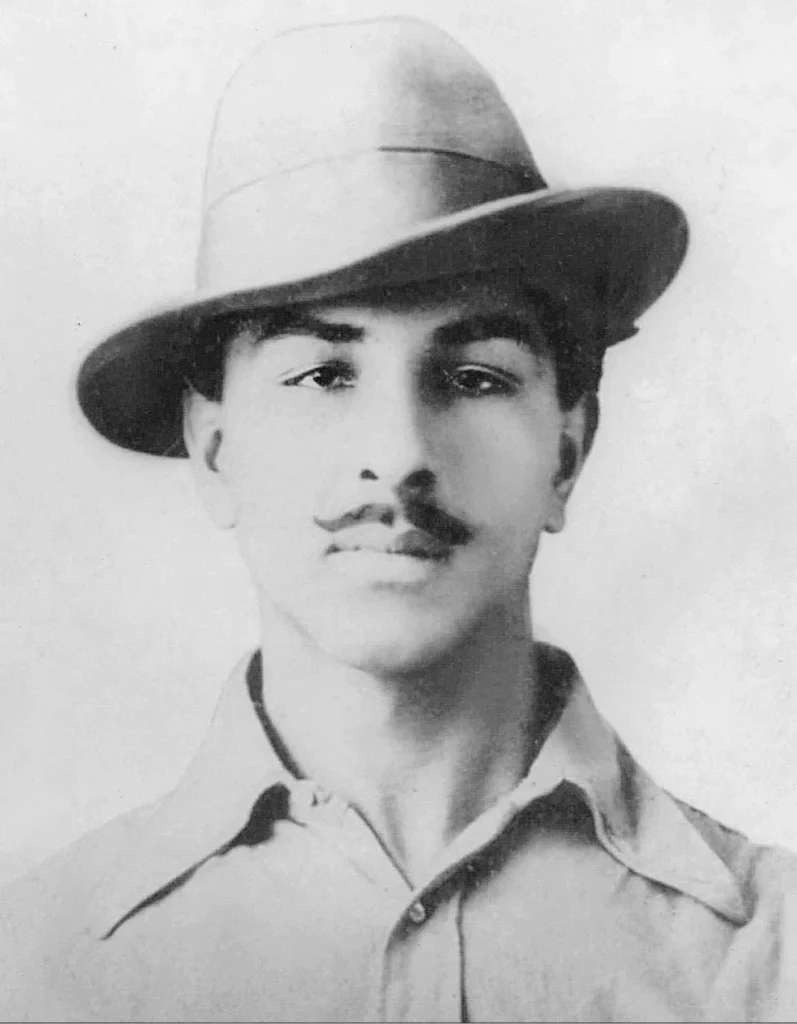
India is remembering Shaheed-e-Azam Bhagat Singh on his 119th birth anniversary on September 28, 2026. Born on September 28, 1907, in Banga village in the Lyallpur district of undivided Punjab, now in Pakistan, Bhagat Singh became one of the prominent revolutionaries associated with India’s freedom struggle.
He was associated with the Naujawan Bharat Sabha and the Hindustan Socialist Republican Association (HSRA). In December 1928, Bhagat Singh and his associates killed British police officer J.P. Saunders in Lahore. On April 8, 1929, Bhagat Singh and Batukeshwar Dutt threw bombs inside the Central Legislative Assembly in Delhi and remained at the scene to face arrest.
Bhagat Singh was later tried in the Lahore Conspiracy Case and hanged alongside Shivaram Rajguru and Sukhdev Thapar at Lahore Central Jail on March 23, 1931, at the age of 23. His birth anniversary continues to be observed across India, particularly in Punjab.
Early Revolutionary Years
Bhagat Singh was born into a family with connections to the freedom movement and became interested in the struggle against British rule at a young age. He studied at National College in Lahore and became involved in political activities and writing. In 1926, he helped establish the Naujawan Bharat Sabha, which sought to mobilise young people around the freedom movement.
He was also associated with the Hindustan Republican Association, which was later reorganised as the Hindustan Socialist Republican Association. Bhagat Singh contributed articles to newspapers and journals and developed political views that were reflected in his writings and activities.
Saunders And Assembly
On December 17, 1928, J.P. Saunders, an Assistant Superintendent of Police in Lahore, was shot dead by revolutionaries including Bhagat Singh and Rajguru. The revolutionaries had intended to target police officer James A. Scott, whom they held responsible for the lathi-charge during a protest against the Simon Commission in Lahore in which Lala Lajpat Rai was injured.
Saunders was killed instead. Months later, on April 8, 1929, Bhagat Singh and Batukeshwar Dutt threw bombs inside the Central Legislative Assembly in Delhi. They did not flee after the incident and were arrested at the scene. The Assembly bombing was followed by the prosecution of Bhagat Singh in the Lahore Conspiracy Case.
Prison And Execution
During his imprisonment, Bhagat Singh and other prisoners undertook a prolonged hunger strike demanding better conditions for political prisoners. The protest attracted widespread attention, particularly after fellow revolutionary Jatindranath Das died following his hunger strike in September 1929.
Bhagat Singh continued reading and writing during his imprisonment, producing political and philosophical writings that have remained part of the historical record. He was subsequently sentenced to death in the Lahore Conspiracy Case.
Bhagat Singh, Rajguru and Sukhdev were hanged at Lahore Central Jail on March 23, 1931. Bhagat Singh was 23 years old. His death and writings have continued to shape public remembrance of the revolutionary strand of India’s freedom struggle.

PM Modi’s Tribute
Prime Minister Narendra Modi paid tribute to Bhagat Singh on his 119th birth anniversary on September 28, 2026. In a statement issued by the Prime Minister’s Office, Modi said that Bhagat Singh’s “indomitable courage and valour” gave a new edge to the freedom movement.
He added that Bhagat Singh’s spirit of sacrificing everything for the honour of the nation remains a symbol of the courage and determination of India’s youth. Modi also shared the tribute on X.
शहीद भगत सिंह को उनकी जयंती पर कोटि-कोटि नमन।
— Narendra Modi (@narendramodi) September 28, 2026
अपने अदम्य साहस और शौर्य से उन्होंने आजादी के आंदोलन को नई धार दी।
राष्ट्र के सम्मान के लिए सर्वस्व न्योछावर करने का उनका जज्बा भारत के नौजवानों की हिम्मत और हौसले का प्रतीक है। pic.twitter.com/GPH1tNHyVf
The Logical Indian’s Perspective
Bhagat Singh’s life remains an important part of India’s history, not only because of his execution at the age of 23 but also because of his political activities, writings and participation in the revolutionary movement. Remembering him responsibly means engaging with the documented events and ideas of the period while recognising that India’s freedom struggle involved different movements, organisations and approaches.
His writings provide an opportunity for younger generations to explore the political debates and circumstances that shaped the choices of revolutionaries during colonial rule. As India remembers Bhagat Singh on his 119th birth anniversary, how should his documented ideas and writings be understood by today’s generation?
Read More: India Sends Fresh Consignment Of Life-Saving Medicines To Kabul, Expands Health Support


