




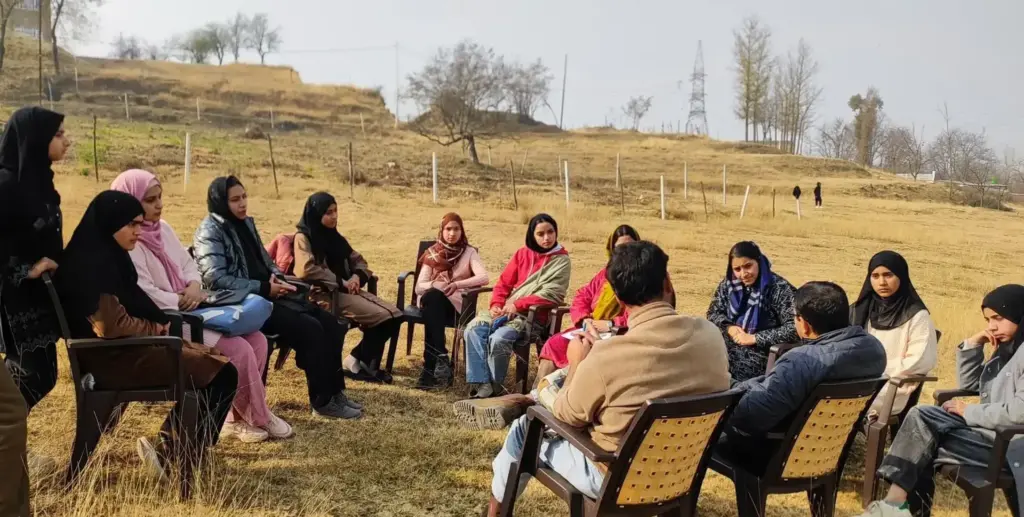
Every Sunday morning, amidst the vast saffron fields and shimmering waters of Pampore in Jammu & Kashmir’s Pulwama district, a unique gathering takes place. Dozens of young children arrive carrying sketchbooks, binoculars, and boundless curiosity. They gather not inside a concrete school building with blackboards and desks, but outdoors on carpets spread across open fields bordering local wetlands. This is the Nature School, an innovative educational experiment where the landscape itself serves as the primary master teacher.
Education Without Bound Walls
Founded by environmental lawyer and activist Advocate Nadeem Qadri, the Nature School was established to address two pressing challenges: the steady degradation of Kashmir’s freshwater ecosystems and the lack of interactive, stress-free learning spaces for local youth. Operating on a simple single-story mud-brick foundation alongside open meadows, the school deliberately dispenses with fees, entrance exams, uniform codes, and fixed syllabi.
“A rich kid should get what a poor kid should get,” the organizers emphasize, explaining why the initiative remains completely free and accessible to every family regardless of socioeconomic background. By removing institutional and financial barriers, the school attracts over 30 regular attendees each weekend, ranging from young school pupils to university-age volunteers.

Wetlands as Living Classrooms
At the Nature School, learning is driven entirely by child interest and direct environmental observation. Children interested in painting sit on the grass with watercolor pads, rendering images of local kingfishers, egrets, and saffron blossoms. Others dive into an open-air library, while groups gather in circles to hold discussions on climate change, waste management, and wildlife conservation.
The neighboring Chatlam, Fashkoori, and Manibugh wetland reserves serve as natural laboratories. Guided by young environmental science graduates and conservationists, children observe migratory waterbirds that flock to Kashmir’s water bodies each season. By observing how water systems sustain regional agriculture and ecology, students develop a deep personal relationship with their natural surroundings.

Building Voice and Confidence
Beyond ecological literacy, the Nature School acts as a social incubator for personal development. Outdoor activities, group presentations, and interactive games help shy and reserved children find their voice. Moving outside formal classroom hierarchies allows students from different schools and economic backgrounds to introduce themselves, share ideas freely, and build public speaking confidence.
Recognizing local safety concerns that sometimes make families hesitant to send young girls to outdoor events, female mentors actively communicate with parents, accompany students during field tours, and provide organized local transport. This inclusive approach ensures that young girls participate equally in environmental advocacy, field explorations, and leadership roles.
Fostering Community Support
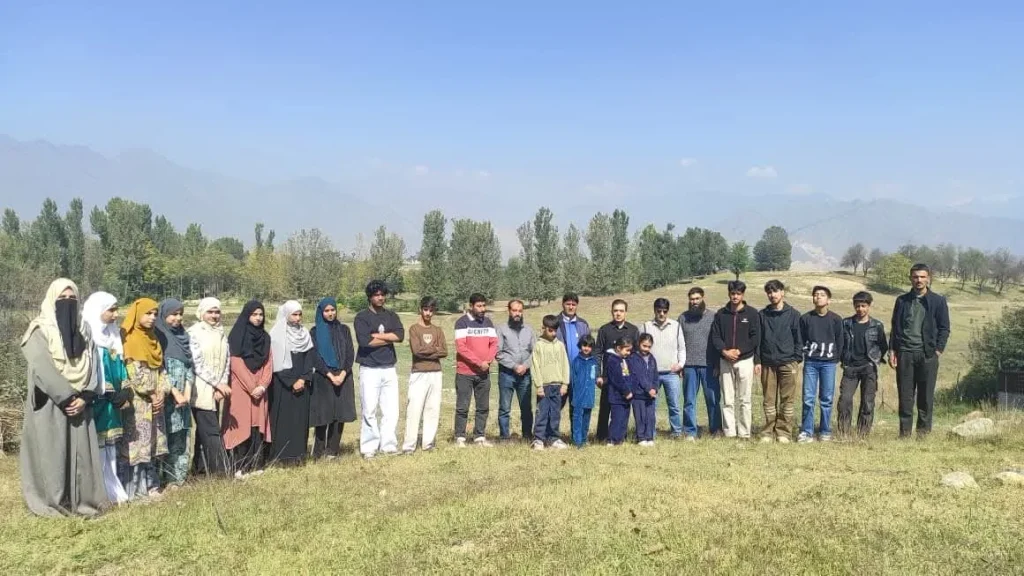
The Nature School operates largely through volunteer dedication, local youth engagement, and grassroots community support. Local educators, guest researchers, and social activists drop in to share specialized knowledge, while young volunteers manage weekly logistics and activity modules. By instilling pride in local natural heritage, the school is raising a generation prepared to protect Kashmir’s fragile water commons against encroachment, waste dumping, and neglect.
Nurturing Future Ecological Stewards
As the initiative grows, hundreds of children have passed through its open fields, carrying home a newfound appreciation for environmental conservation. The school’s success demonstrates that when children are trusted to lead their own learning journeys, education becomes a source of joy rather than academic burden. These young learners are not merely absorbing information; they are growing into active stewards who will advocate for sustainable policies, clean water resources, and ecological preservation across the region.

The Logical Indian’s Perspective
The Nature School in Pampore presents an inspiring blueprint for community-led environmental education across India. By removing financial barriers, rigid syllabi, and physical classroom walls, the initiative allows children to connect directly with Kashmir’s fragile ecosystems. Teaching young learners to observe, respect, and defend their local wetlands fosters a deep sense of environmental responsibility. This grassroots approach proves that genuine learning thrives when nurtured by nature, community volunteerism, and shared commitment to protecting the planet.
How can local communities and municipal bodies replicate wall-free experiential learning to protect urban natural commons?
Also Read: Kerala’s Lone Jungle Teacher K. R. Usha Kumari Taught Tribal Children, Later Reassigned As Sweeper


