




The universally accepted definition of health extends far beyond the clinical absence of disease; it encompasses an absolute state of physical, social, and mental well-being . Yet, modern global medical networks have largely reduced this holistic ideal into an automated, profitable corporate enterprise. Doctors and hospitals are highly trained to aggressively treat isolated organs, while completely ignoring the psychological, economic, and familial devastation that ravages a patient during a serious illness.
Dr. M.R. Rajagopal, widely revered as the “father of palliative care in India,” refused to let this systemic apathy remain the gold standard of care. Recognizing that the absolute pursuit of a clinical “cure” was stripping people of basic human empathy, he stepped away from a conventional career to advocate for the forgotten millions enduring life-limiting pain . Today, as the Chairman Emeritus of Pallium India, his lifelong crusade remains anchored in a simple, revolutionary premise: healthcare must treat the person, not just the pathology.
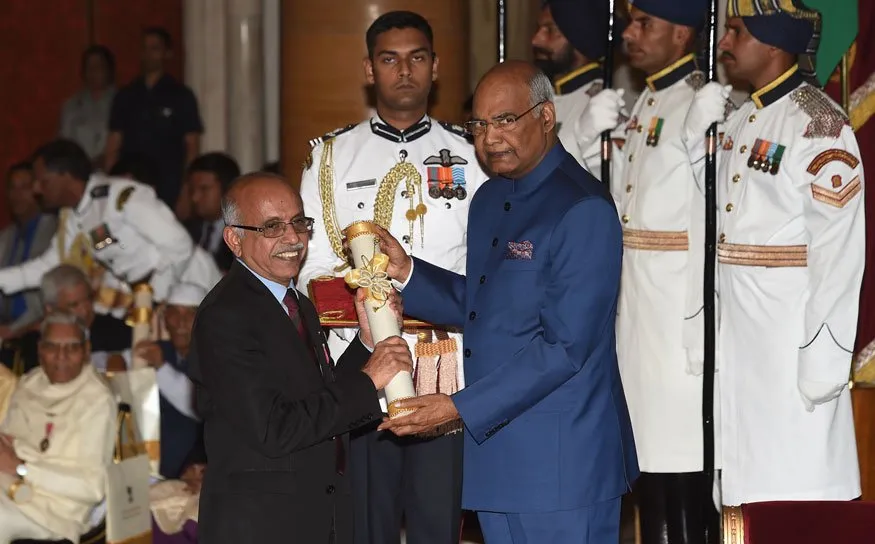
In an exclusive interview, Padma Shri awardee Dr. M.R. Rajagopal, Chairman Emeritus of Pallium India, dismantles the cold commercialization of modern medicine . Leading a decentralized, community-first movement, Pallium India sends clinical teams directly into the homes of abandoned and bed-bound patients to provide comprehensive medical, financial, and emotional support. Reflecting on his journey, documented in his moving memoir, Dr. Rajagopal shares profound insights on systemic resistance, pioneering legislative changes for pain management, and a stirring final call to action for a nuclear-family society to revive its lost community spirit.
Redefining True Healthcare
Modern healthcare systems operate on an incredibly narrow framework, leaving patients structurally underserved. Globally, universal health coverage is built upon five critical pillars: healthcare must be diagnostic, preventive, promotive,curative, rehabilitative and palliative. However, the overwhelming majority of global resources are skewed toward a single quadrant.
Dr. Rajagopal points out that roughly 80% of mainstream health system in India allocate their energy solely to curative interventions. This hyper-fixation ignores the millions left with non-curable, progressive conditions. As a result, individuals facing terminal diagnoses are effectively locked out of compassionate relief.
“Healthcare today is not healthcare. Today it is only curing diseases… To me, as a consumer, as a healthcare recipient or potential recipient, I feel cheated. I am cheated out of healthcare,” he states frankly.

The Sterile ICU Trap
The absolute failure of this curative-only mindset manifests most agonizingly at the end of a human life. International assessments, such as the Lien Foundation’s Quality of Death Index, consistently rank India among the worst nations in the world for end-of-life care.
Instead of passing away peacefully at home surrounded by familiar faces, terminal patients are routinely subjected to aggressive, painful, and futile procedures in isolated Intensive Care Units . This approach succeeds only in artificially extending the dying process under sterile hospital lights.
Dr. Rajagopal challenges this institutional norm by asking a deeply personal question:
“Am I likely to do well in an intensive care unit at the end of life? Where I will be lonelier than if I were alone? Where my family can see me twice a day for five minutes, but cannot even touch me because of the cables and monitors… and where my dying prognosis will be extended, possibly from two days to 20 days or 20 weeks.”

Confronting Catastrophic Poverty
The crisis is worsened by an unregulated private healthcare sector, which commands nearly 65% of medical services in India . Desperate families, operating under the illusion that an expensive hospital stay can save an incurable loved one, routinely exhaust their life savings.
The financial fallout is staggering. Landmark public health data indicates that approximately 5.5 crore Indians are driven below the poverty line annually due to catastrophic health expenditures.
This means a single medical diagnosis can throw multiple generations of a family into absolute financial ruin. Mainstream medicine systematically destroys the socioeconomic health of the very communities it promises to protect.

Reaching Abandoned Homes Directly
In sharp contrast to centralized, profit-driven corporate hospitals, Pallium India embraces a decentralized operational philosophy. They refuse to stay confined within metropolitan clinics, waiting exclusively for mobile patients who can afford to travel.
Every day, the organization dispatches eight dedicated mobile clinical units across Trivandrum. Comprising doctors, nurses, and medical social workers, these teams navigate intense urban traffic and remote, unpaved rural roads to reach the margins.
By delivering medical attention directly to the doorsteps of those who are completely bed-bound or paralyzed, they preserve dignity where the healthcare system has completely walked away.

Healing Beyond Physical Pain
Palliative care is frequently misunderstood as merely dispensing heavy pain medication, but Pallium India treats the social and spiritual ripples of a medical crisis. When a primary wage earner becomes bedridden, a household loses its livelihood, pushing the family toward starvation.
To break this cycle, the foundation manages an integrated social support apparatus. They distribute essential monthly dry ration kits to roughly 200 vulnerable households, ensuring that families do not go hungry while caring for an ailing relative.
Furthermore, because childhood education is often the first casualty of an economic shock, Pallium India funds the education of over 250 children. They supply textbooks, uniforms, and bags and offer mentoring so that young students aren’t forced into child labor.

A Lifetime Of Lessons
Dr. Rajagopal’s extensive experience at the bedside taught him that listening to a patient’s narrative is just as vital as analyzing a medical scan . He crystallized these decades of profound human interactions into his celebrated memoir, Walk with the Weary: Life-changing Lessons in Healthcare.
The book serves as an intimate chronicle of his journey as a physician who discovered that medicine’s ultimate calling is to offer unconditional security to people at their most vulnerable . By weaving together his own life history with the stories of the unique patients he treated, the memoir acts as a definitive masterclass in empathy.

The Strategic ‘DEF’ Model
To scale this empathetic framework across a massive subcontinent, Pallium India relies on a strict, three-tiered methodology known as the DEF strategy: Demonstrate, Educate, and Facilitate .
First, they demonstrate high-quality, community-integrated care through their local home-visit networks. Second, they actively educate thousands of medical professionals and everyday citizens through specialized training module.
Finally, they facilitate macro-level systemic change. Their relentless legal and bureaucratic advocacy helped secure historical Supreme Court directives, prompted the simplification of draconian narcotic regulations for pain relief led to Government of India’s National Program for Palliative Care and pushed states like Kerala and Karnataka to integrate dedicated palliative care allocations directly into their annual government budgets.

Overcoming Systemic Friction
Pioneering a radical shift within a deeply entrenched, highly traditional medical landscape is met with intense institutional pushback. Dr. Rajagopal admits that introducing decentralized, community-led care models initially triggered considerable friction from standard medical establishments and hospital management.
“Change causes immediate fear… The fear causes anger. ‘What does this guy think he is? We have been doing okay all this time,'” he explains.
Over the decades, the Chairman Emeritus learned that actively fighting or arguing with institutional antagonists is a counterproductive expenditure of energy . Instead, the path to lasting, sustainable change relies on quietly demonstrating undeniable results on the ground and building alliances with the communities whose lives are directly transformed.

Rebuilding Lost Community Spirit
Ultimately, the future of healthcare does not belong entirely to professional institutions; it relies heavily on reviving local human connections. When asked what advice he would give to professionals and individuals looking to transition into the social impact space, Dr. Rajagopal shared a profound perspective on modern isolation and the corporate pursuit of success.
He observed that as Indian society rapidly transitions away from traditional joint family systems toward hyper-isolated nuclear households, the protective fabric of community support is disintegrating. This structural shift has left individuals incredibly lonely and completely unequipped to handle severe life crises.
“Most people get some satisfaction out of helping others. They don’t know what to do. So, people who want to help others should get together and get into the nearby Palliative Care Institution and start their journey,” he advises.
He urges people to look beyond material wealth and corporate milestones to find true purpose:
“As social animals, we cannot be islands. I think in life, when we are looking at the salaries, sleep, and career promotion, and a good house to live in… a good car to drive in… we don’t ask ourselves how much satisfaction came. Maybe because we are switching from joint families to nuclear families, the community spirit that was around us… it is not there because nobody tries to get it together . And one of the things that we have done is to build a stronger community.“

The Logical Indian’s Perspective
Dr. M.R. Rajagopal’s lifetime of service exposes the cold limitations of a medical system that treats diseases while ignoring human beings. Pallium India’s work serves as a powerful reminder that true healing requires a collective village, a blend of medical expertise and compassionate neighbors who step forward to distribute groceries, fund a child’s schoolbag, or offer comfort to a dying soul.
As our society continues to pull apart into isolated nuclear units, we must heed his call to rebuild our shared social spaces.
How can we consciously step outside our immediate routines to breathe life back into our neighborhoods, ensuring that no one around us has to navigate pain or final moments entirely alone?
If you’d like us to feature your story, please write to us at csr@5w1h.media
Also Read: People of Purpose: How Harish Sadani Is Challenging Harmful Ideas of Masculinity Through MAVA


