



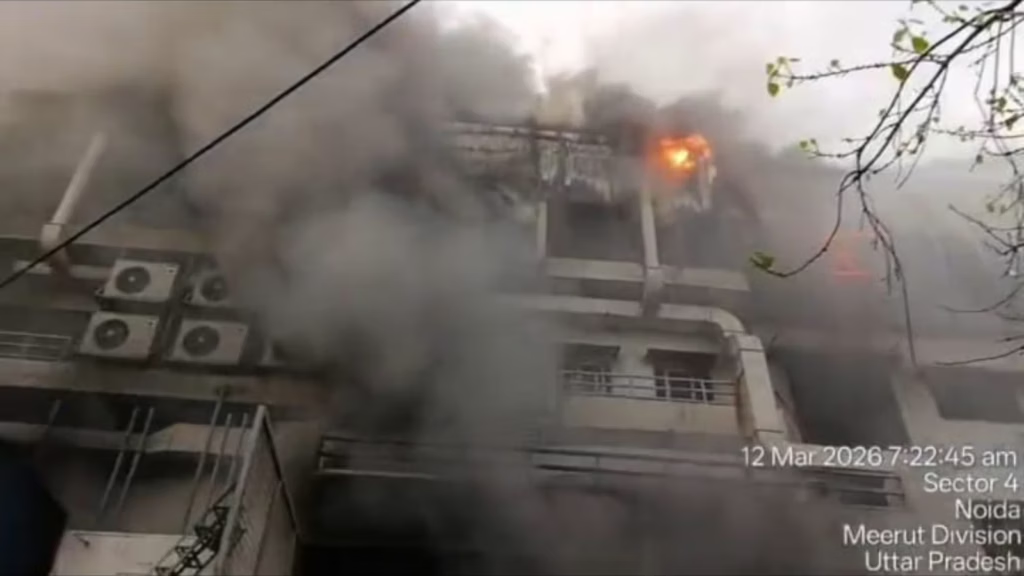
A devastating fire broke out in the early hours of Thursday, 12 March 2026, at Capital Power System Limited, an electric metre manufacturing company, in Noida’s Sector 4, under the jurisdiction of the Phase 1 Police Station. At least 26 people were injured and nearly 250 workers were trapped inside the factory when the blaze erupted, many of whom were on overnight duty.
The cause of the fire is yet to be officially identified. Emergency services responded swiftly, deploying a large fleet of fire tenders to contain the blaze and evacuate workers. Additional Deputy Commissioner of Police Manisha Singh confirmed that all 26 injured persons have been admitted to the district hospital and are currently stable, though some are being treated in the ICU and a few have suffered fractures.
Smoke, Panic And A Race Against Time
The fire erupted suddenly at around 5:00 am at the industrial unit located in the Harola area close to Sector 4, a bustling manufacturing hub in Uttar Pradesh. Eyewitnesses described thick black smoke billowing from the site, quickly engulfing the premises and spreading to adjacent sections of the factory.
The situation inside turned chaotic almost immediately videos circulating on social media showed workers leaping from second-floor windows onto makeshift cushions below, highlighting the sheer panic that gripped the premises. Rescue teams broke windows to evacuate those who were trapped inside.
Joint Commissioner of Police (Law and Order), Rajeev Narayan Mishra, said that the fire team, including the Chief Fire Officer of Gautam Budh Nagar, reached the spot immediately after receiving information about the blaze. Around 250 night-shift workers were rescued using 30 fire tenders and hydraulic platforms and were sent to the District Hospital for treatment owing to heavy smoke and suffocation.
With continuous efforts by the fire brigade, the blaze was eventually brought under control. Singh added that while some of the injured are undergoing treatment in the ICU and a few have suffered fractures, all are currently stated to be stable.
Noida’s Industrial Zones And The Fire Safety Question
Thursday’s tragedy is far from an isolated incident. Noida’s densely packed industrial clusters, home to hundreds of manufacturing units operating round the clock with large night-shift workforces have repeatedly been the sites of such emergencies. The blaze spread rapidly due to the presence of highly flammable materials, creating chaotic scenes as workers struggled to escape. Initial reports suggest the fire may have originated from an electrical short circuit or unattended machinery both common hazards in such densely packed industrial zones.
Concerns also mounted over toxic fumes from burning chemicals and plastics, potentially endangering nearby residential areas and over 50 small factories in the vicinity. Rescue teams formed human chains to evacuate workers who had made it to safer spots within the building, while local police cordoned off the area and diverted traffic to allow unhindered access for emergency vehicles. An official inquiry into the exact cause of the fire is expected to be launched. Serious questions are now being raised about whether adequate fire safety audits, emergency exit infrastructure and mandatory fire drills are in place at factories of this scale.
The Logical Indian’s Perspective
Behind every statistic in a factory fire is a worker who left home before dawn, trusting their workplace to keep them safe. The fire at Capital Power System Limited is a stark reminder that industrial safety in India cannot remain an afterthought, it is a matter of dignity and human life.
The prompt response by the fire brigade and police deserves genuine acknowledgement; deploying 30 fire tenders and hydraulic platforms to rescue 250 trapped workers in real time is no small feat. Yet the very scale of the crisis workers leaping from windows, dozens hospitalised, toxic fumes threatening an entire neighbourhood points to deeper, structural failures that swift emergency response alone cannot fix.
Workers, many from economically vulnerable backgrounds, deserve far more than reactive rescue efforts; they deserve proactive protection through rigorous safety audits, regular fire drills, proper emergency infrastructure, and the freedom to raise safety concerns without fear of losing their livelihoods. As authorities launch their inquiry, the focus must not stop at finding a single cause, it must extend to systemic accountability.
Also Type: Iran Israel US War: Iran Proposes 3 Conditions to End War With US and Israel


